Travel Tuesday is the Tuesday straight after Cyber Monday — the day travel brands took for themselves because a holiday isn't an impulse buy you make between two electronics deals. By then the retail noise has stopped, inboxes have quietened, and your customer has just spent four days shopping and remembered they haven't booked anything for next year.
That combination — high intent, low competition for attention — is why the day works. Below are ten popup campaigns across the week around it: what to run before, on the day, and in the evening when half-finished bookings start getting abandoned.
Key Takeaways
- The Tuesday is won in the week before it. Build the early-access list first; the sale reaches almost nobody otherwise.
- Sell flexibility, not just price. Low deposits and free date changes convert travel buyers better than a percentage does.
- Attention is cheap on the Tuesday. Everyone else's sale ended on Monday night — that's the whole opportunity.
- Bookings get abandoned mid-form. An evening exit-intent campaign on the booking page is the highest-value hour of the day.
- Set a date window on every campaign so the sale ends by itself, even if you're offline.
Why Travel Tuesday suits a smaller travel brand
Three structural reasons it's a better fit than Black Friday for most independent operators:
- You're not competing with electronics. On the Friday and Monday your email lands between forty retail sales. On the Tuesday it lands almost alone.
- The purchase is considered. Nobody books a two-week trip in the four minutes between two deal alerts. The extra day gives the decision room it actually needs.
- Your best offer costs you less than a discount. Flexibility, a deposit, an upgrade — these are worth a lot to a nervous traveller and cost you little, which is not true of 20% off a high-value booking.
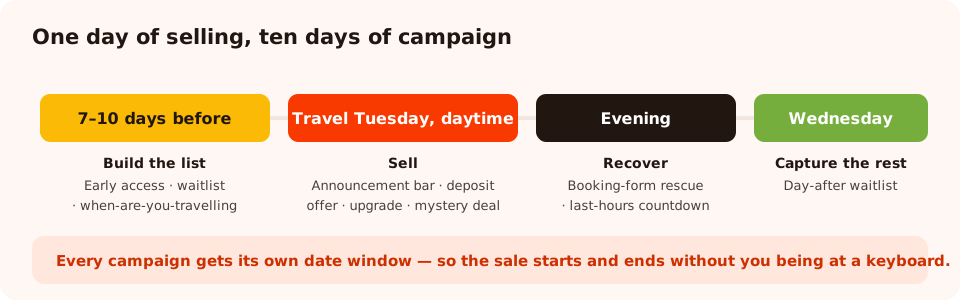
One day of selling, ten days of campaign. The week before is what makes the Tuesday work.
The week before: build the list (ideas 1–3)
1. The early-access signup
Seven to ten days out, on destination and package pages. Trigger at 50–60% scroll, audience set to
everyone, one email field.
"Our Travel Tuesday deals go live 24 hours early for subscribers. Want in?"
Early access is the strongest list-building offer a travel brand has, because the customer knows the good rooms and the good dates go first. It's true, it's concrete, and it costs you nothing.
2. The destination waitlist
On individual destination pages, as an inline form
in the body rather than an overlay.
"Tell us where you're thinking of going and we'll send you that deal first — not all forty of
them."
One tappable question — Europe, Asia, Americas, Beach, City — plus an email. You get a segmented list going into the sale, which means the Tuesday email can actually be relevant instead of a catalogue. A one-question quiz handles this better than a text field, because the answers come back normalised.
3. The "when are you travelling" qualifier
For returning visitors only, in the days before. Ask the one thing that changes what you send: "Roughly when are you hoping to travel?" with options for the next three months, later this year, next year, and just dreaming.
"Just dreaming" is not a wasted answer — it's a twelve-month nurture segment, and it stops you sending a 48-hour deadline to someone who was never going to book this week.
On the day: the offer campaigns (ideas 4–7)
4. The announcement bar
The quietest and most useful campaign of the day. A bar at the top of every page: "Travel Tuesday: our lowest deposits of the year — today only. Ends 23:59." With a countdown so the deadline is visible rather than merely asserted.
It interrupts nobody, it's on every page including the ones deep in your site, and it's the single cheapest thing you can build. Set a date window so it appears and disappears on its own.
5. The flexibility offer, not the discount
On package and booking pages, exit intent.
"Book today with a €49 deposit — and change your dates free until 60 days before you
travel."
This is the highest-leverage offer in travel. The objection isn't usually price, it's what if my plans change. Removing that risk costs you almost nothing on the bookings that go ahead, and it converts the people a discount wouldn't have moved.
6. The upgrade instead of a price cut
On accommodation and cabin pages.
"Today only: book any room, get the sea view free." An upgrade has high perceived value and
low marginal cost, and unlike a discount it doesn't reset the customer's expectation of what your
rooms are worth.
7. The mystery deal
For brands that want the drama without publishing a headline discount: a scratch card or spin wheel where the reveal is the offer — a free transfer, an upgrade, a per-person amount off, a free extra night. Per-prize win chances let you make the expensive ones rare, and the outcome is decided server-side so it can't be rigged from the browser.
It fits travel better than most seasonal games, because "what did I get" is genuinely fun when the prize is an upgrade on a trip you were already excited about.
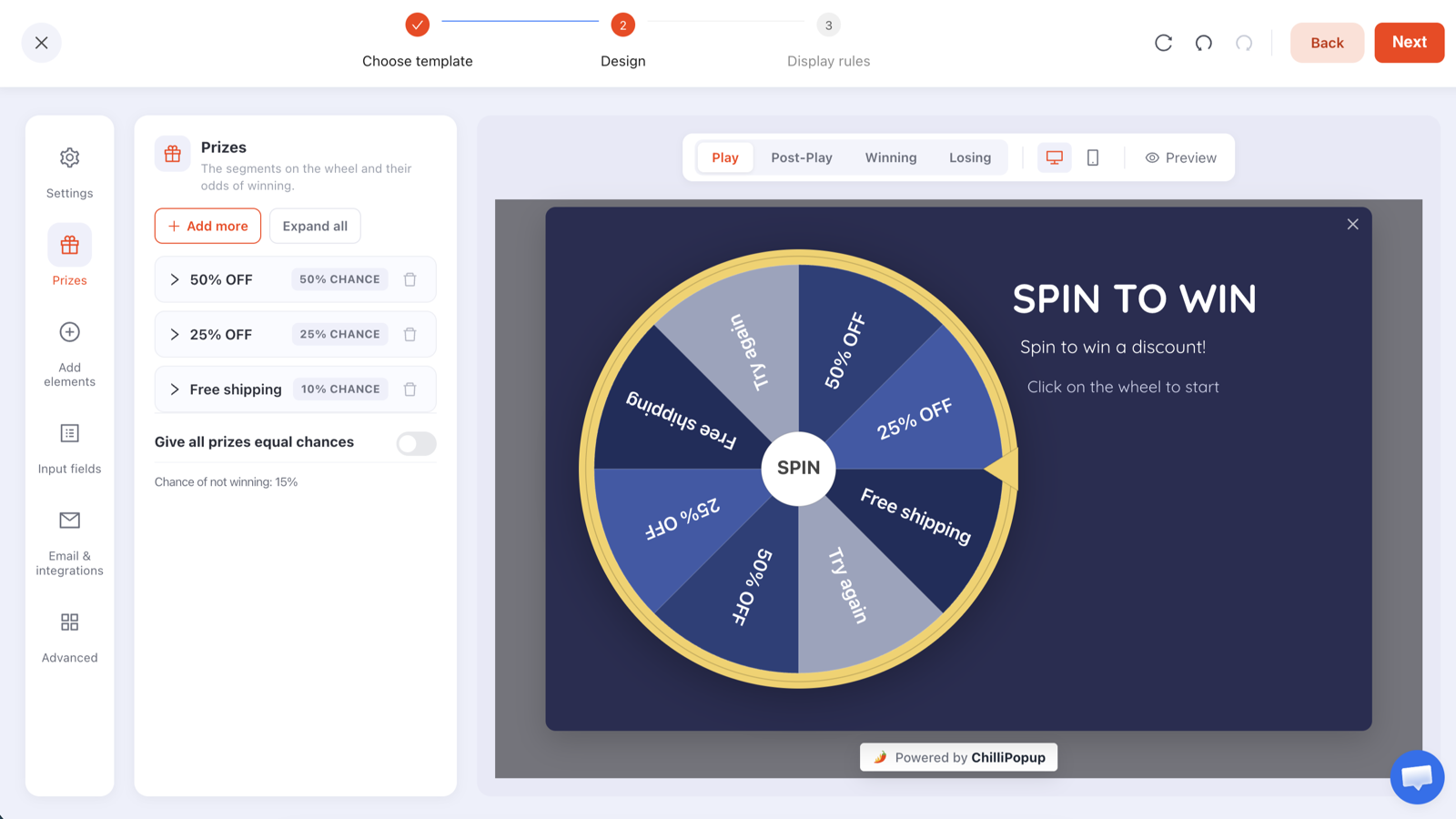
Per-prize win chances mean the free extra night stays rare while everyone still wins something.
The evening and after: recovery (ideas 8–10)
8. The booking-form rescue
Travel booking forms are long — dates, travellers, rooms, extras, names, payment — and they get
abandoned mid-way more than almost any other form on the web. An exit-intent campaign on the booking
page, from late afternoon onwards, is the highest-value hour of your day.
"Hold your dates for 24 hours — no payment now."
Offer to save the search rather than pushing the discount again. The customer's problem at that moment is usually that they need to check with someone else.
9. The last-hours countdown
From about 8pm, a corner slide-in on package pages with a live countdown to midnight. Keep it small — by this point the visitor has seen the announcement bar all day, and a full-screen overlay is a good way to lose them in the last hour.
10. The day-after waitlist
The Wednesday campaign, which most brands skip. For anyone who visited during the sale and didn't
book:
"Missed it? We'll tell you first when the next dates open."
Travel buyers who miss a deadline haven't stopped planning — they've just stopped buying today. This is the cheapest list-building moment of the whole campaign, and the list is unusually warm.
Build the early-access campaign first
Announcement bars, countdowns, prize wheels and booking-page recovery from one editor — with date windows so the sale ends by itself. Free plan, no credit card required. Paid plans from $29/month.
Start free →Copy that works for travel
| Instead of | Try | Why |
|---|---|---|
| "20% off all holidays" | "€49 deposit, free date changes until 60 days out" | Answers the real objection: what if plans change |
| "Sign up for our newsletter" | "Get Travel Tuesday deals 24 hours early" | A concrete, dated reason to hand over an email |
| "Book now" | "Hold these dates — no payment today" | Removes the commitment the visitor isn't ready for |
| "Limited availability" | "3 rooms left for these dates" | Real scarcity persuades; vague scarcity reads as marketing |
| "Don't miss out" | "Deposits go back up at midnight" | Says what actually changes, so the deadline means something |
The display rules a one-day sale needs
Ten campaigns across ten days will collide with each other unless you rule them. Five settings do most of the work — all of them per campaign, in display rules:
- Date window. Non-negotiable for a one-day sale. Each campaign gets its own start and end, so the early-access popup retires itself on Monday night and the Tuesday offers appear without you doing anything at 8am.
- Page targeting — contains your destination or package path for the offer campaigns, and the booking URL for the rescue. Exclude the payment step entirely.
- Audience — new visitors for first-booking offers, returning visitors for the qualifier and the day-after waitlist.
- Frequency — once a day on the offer campaigns. A visitor browsing eight destination pages should meet the popup once, not eight times.
- Show again after conversion — off, so someone who already booked or already signed up isn't asked again for the rest of the week.
One practical note: exit intent is a cursor signal and doesn't exist on phones. For the mobile version of the booking rescue and the evening countdown, use a scroll percentage or the inactivity trigger instead.
Four Travel Tuesday mistakes
- Announcing the sale on the day. With no list built in advance, you're relying on whoever happens to visit. The early-access campaign is the campaign.
- Discounting a high-value booking by a percentage. Run the arithmetic first — on a €2,000 trip, 15% is a large amount of margin for a customer who'd have booked for a free transfer.
- A popup on the payment step. The one place where any interruption is pure loss. Exclude it explicitly.
- Forgetting to switch it off. A "today only" bar still running on Thursday tells every returning visitor that your deadlines are decorative. Set the date window.
What to measure
- List growth in the week before. The leading indicator for the whole campaign — if this is flat, the Tuesday will be too.
- Bookings and revenue per session on the day, compared with a normal Tuesday.
- Booking-form completion rate, before and after the rescue campaign goes live.
- Deposit versus full-payment mix, if you offered a low deposit — that's what tells you whether flexibility did the selling.
- Campaign conversion rate. Each popup, form, survey and quiz reports its own opens, unique views, clicks, submissions and conversion rate, so you can see which of the ten earned its place next year.
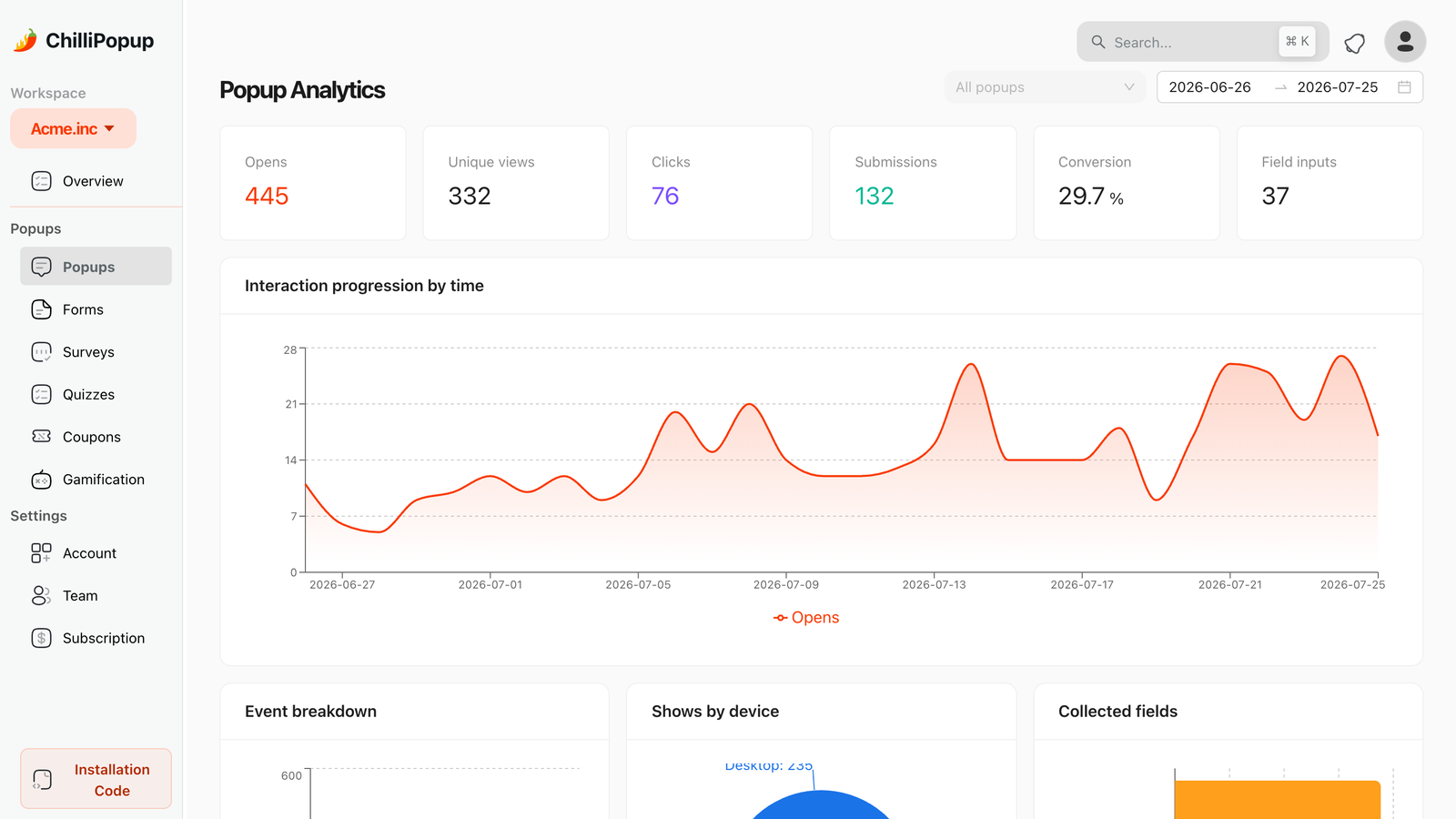
Ten campaigns, ten sets of numbers. Next year you only rebuild the four that worked.
Related reading
Frequently asked questions
When is Travel Tuesday?
Travel Tuesday is the Tuesday immediately after Cyber Monday, which puts it at the end of the same long weekend that starts with Black Friday. It exists because travel is a considered purchase that does not fit the same-day impulse pattern of the rest of the weekend, so travel brands took the first quiet day afterwards.
Is Travel Tuesday worth running if I am a small travel business?
Yes, and it suits small operators better than Black Friday does. Attention is cheaper on the Tuesday because the big retail spend is over, and travel buyers are already in planning mode. A single well-targeted offer on one page beats a store-wide discount you cannot afford.
What kind of offer works for Travel Tuesday?
Anything that reduces the risk of booking early rather than cutting the headline price: a low deposit, free date changes, a room or cabin upgrade, an included extra, or a locked-in price. Travel buyers hesitate because plans might change, not because the price is a euro too high.
Should a travel site use a discount popup?
Use one, but on a deadline and aimed at new visitors, and consider making the offer a flexibility guarantee rather than a percentage. A discount on a high-value booking costs far more per conversion than a free-changes promise that most customers never use.
How early should I start a Travel Tuesday campaign?
Start collecting the list seven to ten days out with an early-access offer, then switch to the sale campaign on the day itself. The list you build in the week before is what makes the Tuesday work — a one-day sale announced on the day only reaches whoever happens to visit.
What should I do the day after?
Two things. Send anyone who did not book a short extension or a waitlist offer, and put a returning-visitor campaign on your highest-traffic destination pages capturing dates for the next trip. Travel buyers who missed the deadline are still planning.