Thanksgiving week is strange for online stores. Traffic climbs sharply, and most of it is not shopping yet — it is planning, comparing and waiting for the discounts everybody knows are coming on Friday. A store that only runs a sale popup during that week is competing for the most expensive attention of the year with the same message as everyone else.
The stores that do well use the week differently: they collect, they inform, and they set up the weekend. Here are ten popup campaigns that do those three jobs, with the copy and the display rules for each.
Key Takeaways
- Build the list before the sale. Early access is the highest-value Thanksgiving campaign, and the only one that keeps paying afterwards.
- The shipping cutoff is the popup people thank you for. Date, deadline, consequence — nothing else.
- Don't announce the discount early. Announce the access. One builds a list, the other trains people to wait.
- Separate campaigns by page so a single visit meets one interruption, not four.
- Set expiry dates when you build, so the holiday campaigns clean themselves up.
The Thanksgiving week, campaign by campaign
A useful way to think about it: the two weeks around Thanksgiving contain four different visitors, and each one needs a different popup.
- The planner, two weeks out, deciding where to shop. Wants a reason to come back.
- The gift-buyer, browsing for someone else, unsure what to pick.
- The deadline-watcher, who will buy if it arrives in time.
- The bargain-hunter, waiting for Friday no matter what you say.

Four campaigns, staggered. The list comes first because everything after it depends on having somewhere to announce.
1. The early-access list
The single most valuable campaign of the season. Two weeks out, on your homepage and collection pages, with an exit-intent trigger on desktop and a scroll trigger on mobile.
"Our Black Friday list opens first. Early access Wednesday, plus one heads-up email — that's it."
One email field. No discount announced, because the offer here is access, not price. That distinction matters: announce the discount and people postpone their purchase; announce the access and they hand you a channel you own for the rest of the year. The Black Friday popup strategy picks up where this campaign hands over.
2. The shipping cutoff bar
The popup nobody resents, because it answers the question the visitor was about to search for. A slim top or bottom bar, every page, from the moment you know your carrier deadline:
"Order by Friday 6pm for delivery before the holiday."
Date, deadline, consequence. No adjectives, no exclamation marks. Add a countdown block if the deadline is inside 48 hours — a real one, tied to the actual cutoff, not a timer that resets on reload. Use a date window in advanced targeting so it disappears by itself the moment it stops being true.
3. The gratitude offer
Thanksgiving is the one commercial holiday where a non-commercial message outperforms a discount. Run it on the day and the day after:
"Thank you. Genuinely — this year was made of orders like yours. Here's 15% until Sunday, no code needed."
Two rules make it land: say what you are actually thankful for in one specific sentence, and keep the offer simple. A gratitude message wrapped around a complicated tiered promotion reads as a sales pitch wearing a cardigan.
4. The gift-finder quiz
For the visitor shopping for somebody else, a catalogue is the enemy. Three questions — who is it for, what are they into, budget — turn forty products into four.
Trigger it from a collection page or a "gift guide" button on the homepage, ask for the email on the last screen and show the recommendation either way. The product recommendation quiz guide covers the question design; the answers double as segment data for December.
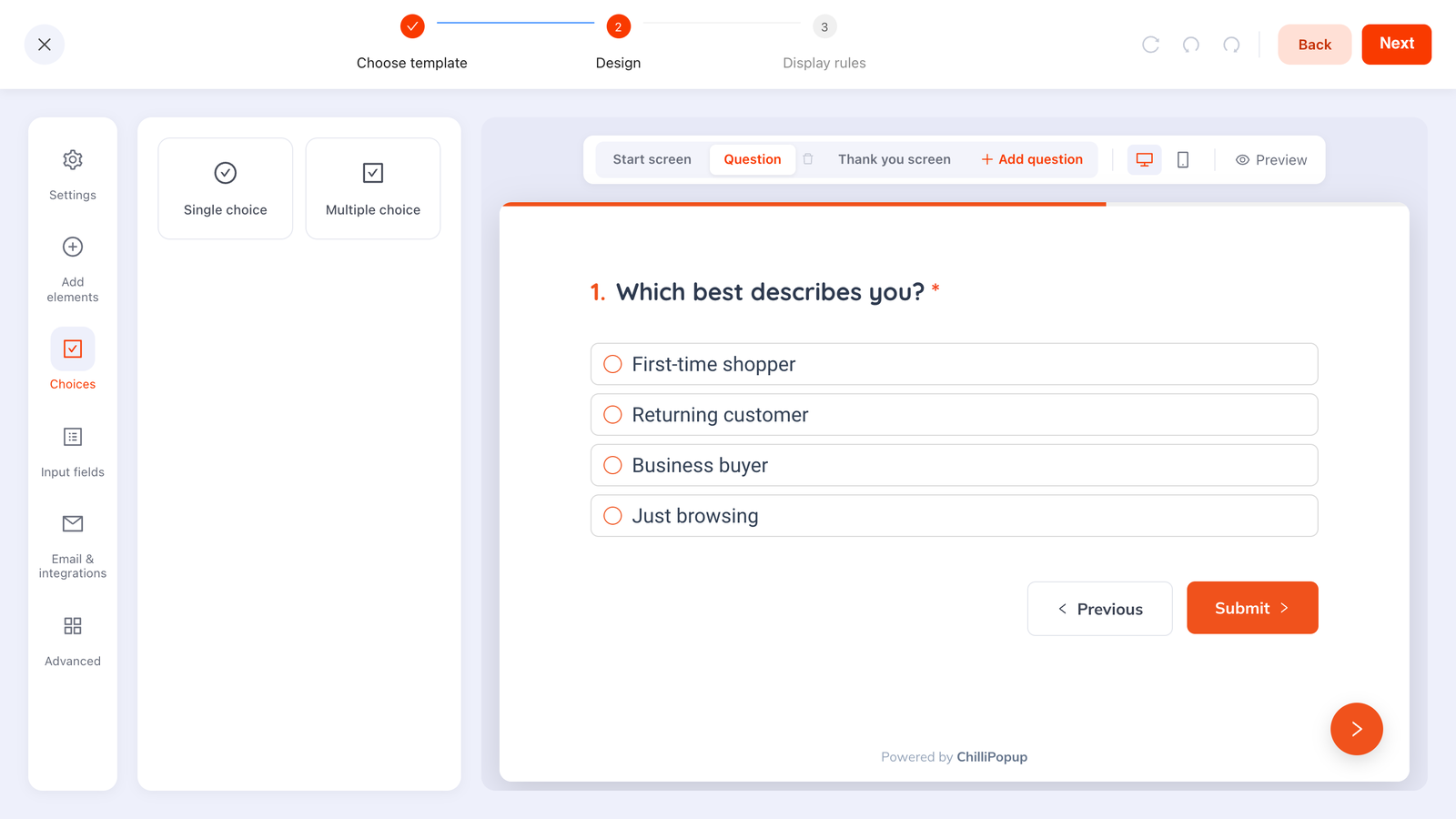
A gift quiz is the seasonal campaign with the longest tail — the answers still segment your list in January.
5. The prize game
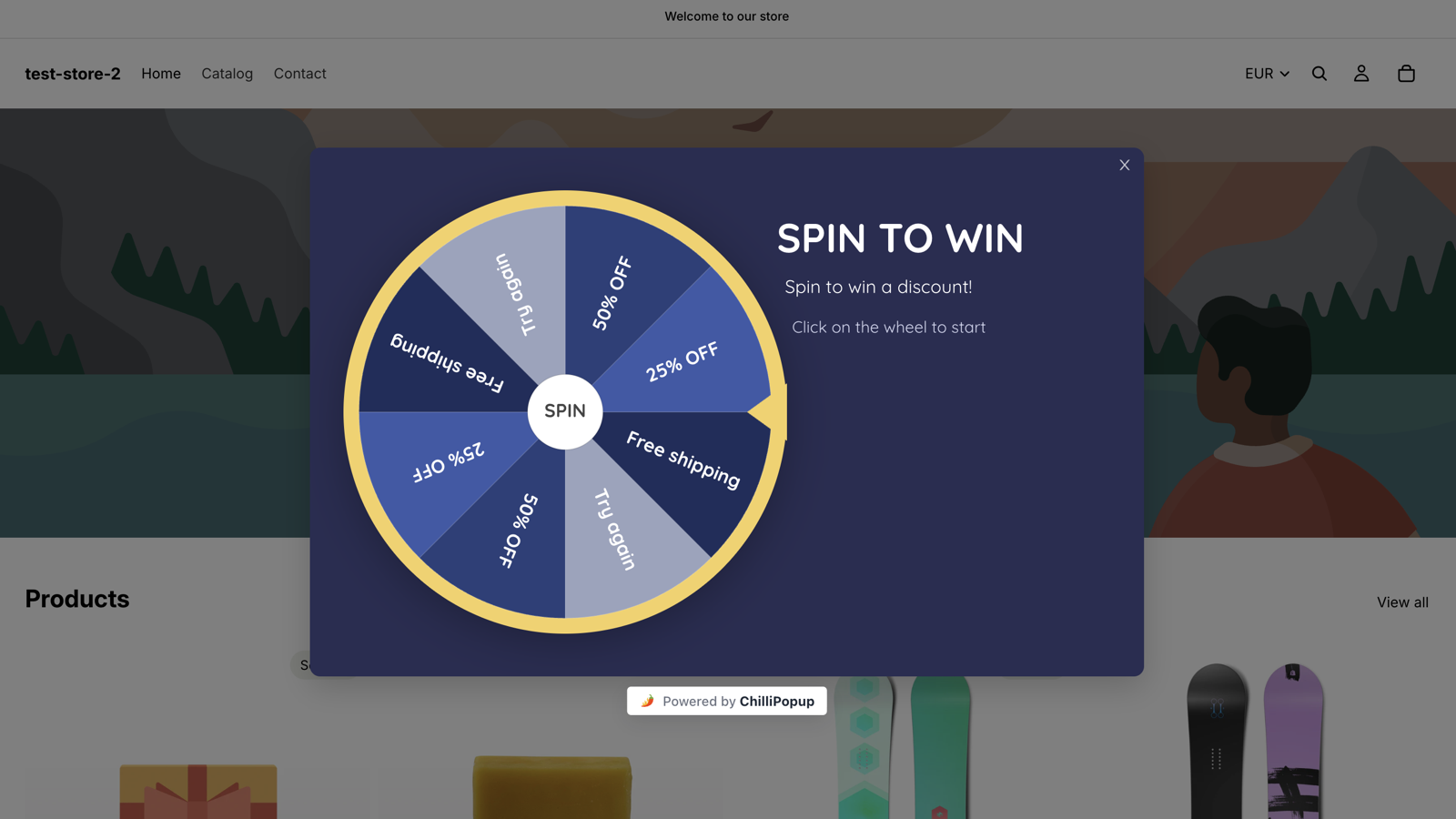
In the days before the sale, a spin wheel or scratch card outperforms a plain discount popup for one reason: a prize you won gets claimed, while a discount you were offered gets postponed.
Three things to get right: every outcome should be worth something (a losing slice teaches people your games are not worth playing), the prize should expire during your sale window rather than after it, and the claim screen is where the email field belongs — the visitor is claiming a win, not filling in a form.
The spin-to-win guide covers building a fair prize table.
6. The "we're closed" notice
If your support team is off, say so before someone writes in and waits. A slim bar, scheduled to the holiday itself:
"Our team is off for Thanksgiving — orders ship Monday, replies from Friday."
This is the cheapest customer-service improvement available in November, and it prevents the follow-up emails that start with "did you get my message?".
7. The small-business message
For independent stores, the weekend after Thanksgiving is genuinely yours. A short, honest popup on the Saturday:
"We're two people and a workshop. Every order this weekend is packed by one of us — thank you for choosing small."
No discount required. This is the message a big-box store cannot send, and it converts because it is true.
8. The cart rescue, tuned for the holiday
Cart abandonment climbs in November because people are comparing. Your exit-intent cart popup should change its objection for the season — from price to timing:
"Still deciding? Order by Friday and it arrives before the holiday."
The standard version of this campaign is covered in the cart abandonment guide; for the holiday, the deadline is a stronger argument than a discount, and it costs you nothing.
9. The recipe or guide lead magnet
For food, homeware, tableware and drink stores, this is the season's natural offer: "The table-setting guide — five ideas, one page." It captures the planner two weeks out, at a moment when they are looking for ideas rather than products, and it makes the first email you ever send them useful rather than promotional. More shapes of this in the lead magnet guide.
10. The post-holiday restock
The campaign everyone forgets. On the Sunday and Monday after, run a quiet popup for the people who missed out: "Sold out over the weekend? Tell us what you wanted and we'll email you when it's back." Product name plus email. It converts frustration into a list, and it is the only campaign here that gets better the more you sold out.
Set up the season in an afternoon
Popups, bars, quizzes and prize games with scheduling, date windows and frequency rules — built once, expiring on their own. Free plan, no credit card required. Paid plans from $29/month.
Start free →The schedule, and the rules that keep them apart
| When | Campaign | Pages | Trigger |
|---|---|---|---|
| 2 weeks before | Early-access list | Home, collections | Exit intent / 50% scroll |
| 2 weeks before | Gift-finder quiz | Gift guide, wide collections | Button click or delay |
| 1 week before | Shipping cutoff bar | Every page | Immediate (a bar, not an overlay) |
| Holiday week | Prize game | Home, collections | Delay, capped frequency |
| The day | Gratitude offer | Home | Delay, date window |
| All week | Cart rescue | Cart only | Exit intent |
| After | Restock waitlist | Sold-out products | Delay |
Three settings stop this becoming a wall of interruptions:
- Page targeting. Notice that no two overlay campaigns share a page. That is the whole trick.
- Frequency capped at once every few days, with "show again after conversion" off, so the people who join stop being asked.
- Date windows on everything seasonal, so the campaigns expire without anyone remembering to switch them off — which is how a "Thanksgiving" popup ends up live in February.
The frequency guide goes deeper on holding yourself to one interruption per visit.
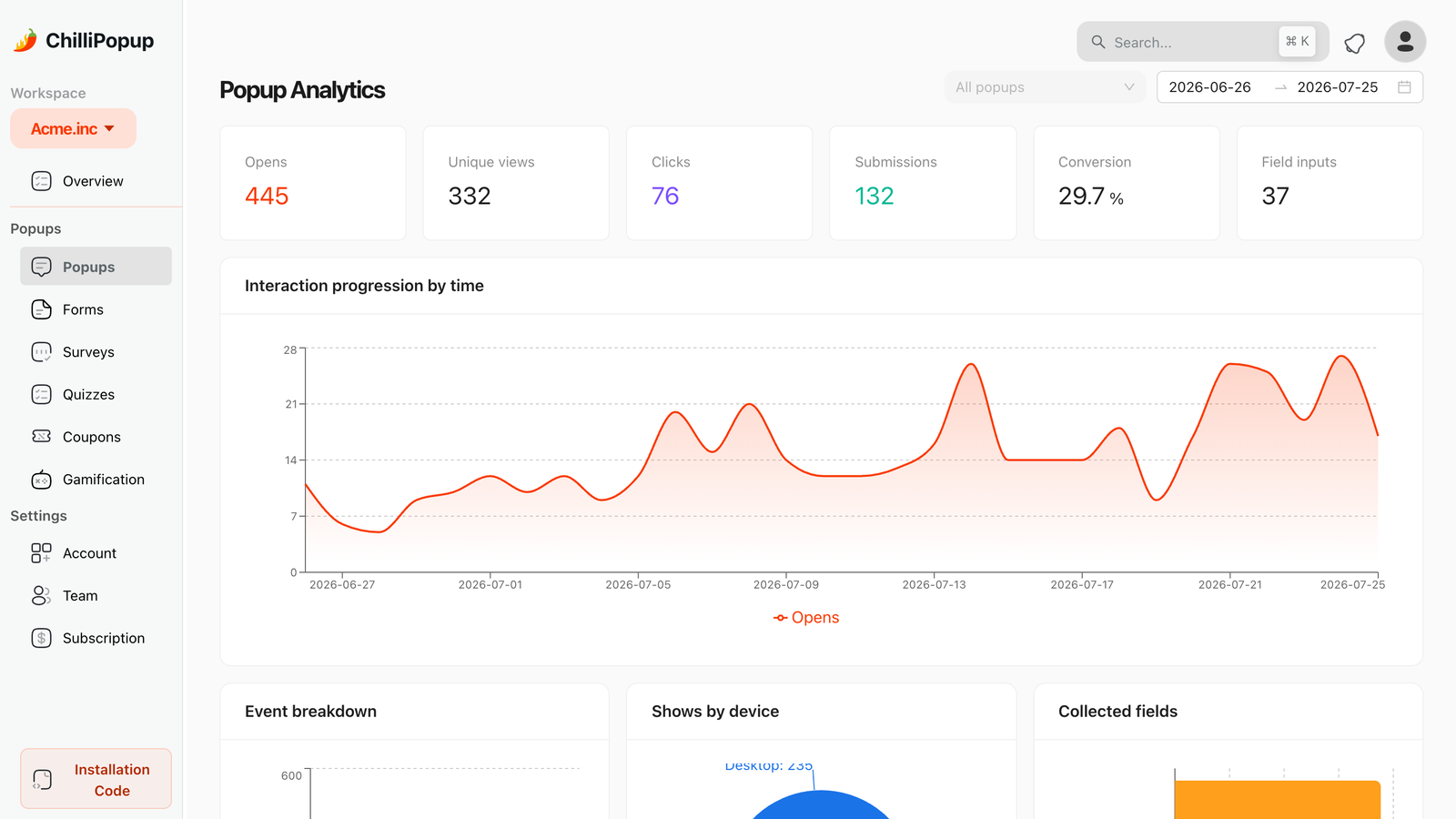
Read the list-building campaigns daily during the week — a signup rate that falls while views rise means the offer has been seen enough.
Five mistakes that waste the week
- Starting on the day. The list has to exist before the sale. Two weeks of collecting beats one day of shouting.
- Announcing the discount early. Every day between the announcement and the sale is a day nobody buys at full price.
- Four campaigns on the homepage. Separate by page, or the visitor experiences your calendar instead of your store.
- A shipping deadline you cannot meet. The one holiday promise customers remember for years. Take the carrier's date and subtract a day.
- No expiry. Seasonal popups without a date window are how stores end up wishing people a happy holiday in the spring.
Related reading
Frequently asked questions
When should Thanksgiving popups go live?
Start the early-access list about two weeks before Thanksgiving, put the shipping-cutoff bar up as soon as your carrier deadline is known, and run the gratitude or sale offer from the start of Thanksgiving week. The order matters: the list has to exist before the sale, because the whole point of building it is having somebody to announce the sale to.
What is the best Thanksgiving popup for an online store?
The early-access list. A sale popup competes with every other sale popup in the week when attention is most expensive, while an early-access signup asks for something cheap — an email — and gives you a channel you own for the weekend that follows. It is the campaign that keeps paying after the holiday is over.
Should Thanksgiving popups mention Black Friday?
Yes, as the reason to join rather than as the offer itself. "Our Black Friday list opens first — early access on Wednesday" gives someone a concrete reason to hand over an address now. Announcing the discount itself before the day just teaches people to wait, and they will wait.
How do I stop Thanksgiving popups from annoying repeat visitors?
Cap the frequency at once every few days, turn off "show again after conversion" so anyone who joined stops seeing the signup, and separate the campaigns by page so a single visit can only ever meet one of them. Holiday traffic includes your most loyal customers, who visit most often and see everything.
What should a shipping cutoff popup say?
The date, the deadline and the consequence, in that order: "Order by Friday 6pm for delivery before the holiday." Skip the adjectives. This is the one holiday popup where the visitor is grateful for the interruption, because it answers a question they were about to ask anyway.
Are prize games a good fit for Thanksgiving?
They work well in the days before the sale, because a won prize is claimed far more often than an offered discount and the claim screen is a natural place to collect an email. Keep the prize table honest, make sure every outcome is worth something, and set an expiry that lands during your sale window rather than after it.