Nobody abandons a website because of one popup. They abandon it because of the third one — the same offer, on the fourth page, shown to someone who subscribed two weeks ago. Frequency is the setting that decides which of those experiences your visitors get, and it is usually the last thing anyone configures.
This guide covers what each frequency option actually does, the one switch that matters more than all of them, recommended settings by campaign type, and how to tell from your own numbers that you have gone too far.
Key Takeaways
- "Once every few days" is the safe default for evergreen list building — frequent enough to catch a buying mood, rare enough to stay invisible.
- Turn off "show again after conversion". Asking a subscriber to subscribe is the most damaging popup experience there is.
- Frequency is per campaign, not per site. Three well-capped campaigns can still add up to three interruptions.
- Only one overlay shows at a time — the rest queue — so stacking is impossible, but sequencing is not.
- Caps live in the visitor's browser, so they reset on a new device, in private browsing, and when someone clears their data.
What "frequency" actually controls
Frequency is the cooldown between two showings of the same campaign to the same browser. It is not a site-wide budget, and it is not per person — those two misunderstandings cause most of the trouble.
Sitting underneath it is a default worth knowing: in ChilliPopup, a campaign with no explicit frequency rule still will not show twice in one session. That built-in cap is what stops a time-delay popup reappearing on every page of a browsing session. But it resets when a new session starts, so a visitor who returns tomorrow meets the popup again — and again the day after that.
The two layers
Layer one — the built-in once-per-session cap, always on, no configuration. Layer two — your explicit display-frequency rule, which takes over from that cap and governs how often the campaign may reappear across sessions and days.
The six frequency options, and what each is for
| Setting | Behaviour | Use it for | Risk |
|---|---|---|---|
| Once a day | At most one appearance per calendar day | Deadline campaigns, sale weeks | Daily visitors meet it seven times a week |
| Every visit | Once per visit, however often they visit | Cart reminders, small bars with real utility | Wears out fast on a content site |
| Every session | Once per browsing session | Long multi-page sessions | Effectively the default, with no cooldown across days |
| Once every few days | A cooldown of N days you choose | Evergreen list building — the sane default | Almost none; start here |
| Once every few visits | Shows on every Nth visit | Frequent-return audiences | Irregular visitors may wait weeks |
| All pages, all the time | No cap at all | Debugging, and legal notices | Never ship this on a marketing campaign |
The last row is a trap. "All pages, all the time" is genuinely useful while you are building and testing — and it is the single most common reason a live site feels hostile, because somebody forgot to change it back before publishing.

Four layers decide whether a popup appears. Three of them are optional; the conversion switch is the one people forget.
The switch that matters more than the cadence
"Show again after conversion." Turn it off and the campaign stops appearing to anyone who already submitted it. Leave it on and your best-behaved visitors — the ones who said yes — keep being asked to say yes again.
This is worth being precise about, because it is easy to over-read. The rule is per campaign: it suppresses that popup for someone who submitted that popup. There is no rule that says "hide campaign B from people who converted on campaign A". If you need that behaviour, approximate it with the audience rule instead — new visitors for the first ask, returning visitors for the second.
The exceptions are narrow: recurring utilities where a second submission is genuinely useful, like a restock alert or a booking request. Everything that builds a list should have it off.
Audience: new, returning, or everyone
The audience rule sits beside frequency and does a related job — not "how often" but "to whom". You choose between everyone, new visitors and returning visitors, and you define what new and returning mean in days.
- New visitors — welcome offers, first-order discounts, "what is this site?" explainers.
- Returning visitors — anything that assumes prior context: a second ask, a loyalty offer, a segment question.
- Everyone — genuine deadlines and site-wide announcements, where missing someone is worse than repeating yourself.
Recognition is computed from the visitor's own browser storage. Someone on a second device, or in private browsing, looks new — which is a good reason never to write copy that would be embarrassing if the "first" visit happened twice.
Recommended settings by campaign type
| Campaign | Frequency | Audience | Show again after conversion |
|---|---|---|---|
| Welcome discount | Once every few days | New | Off |
| Newsletter signup on a blog | Once every few days | Everyone | Off |
| Cart abandonment | Every visit | Everyone | Off |
| Sale countdown | Once a day | Everyone | Off |
| Feedback survey | Once every few visits | Returning | Off |
| Segment quiz (second ask) | Once every few days | Returning | Off |
| Restock or waitlist alert | Every visit | Everyone | On — a repeat signup is useful here |
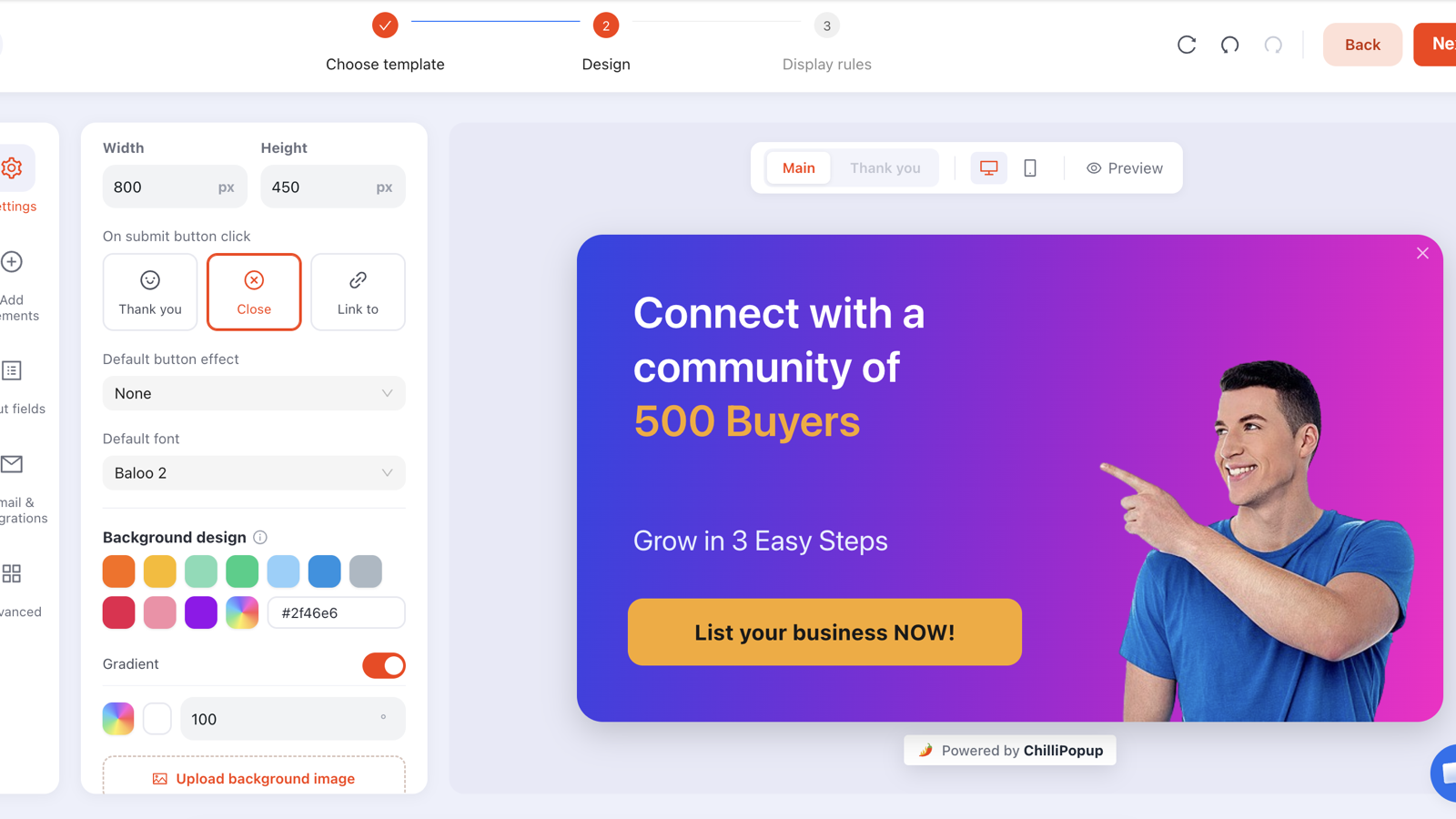
The audience and conversion controls only appear once the display frequency rule is switched on — which is why so many campaigns never get them set.
The site-wide budget nobody sets
Every rule above is per campaign. A visitor does not experience campaigns — they experience a visit. Three individually reasonable popups produce three interruptions, and the visitor blames your site, not your third campaign.
There is a safety net: only one overlay is displayed at a time. If several triggered campaigns become ready together, the others wait in a queue and appear as each is dismissed, ordered by type — popups first, then forms, then surveys, then quizzes. So you cannot accidentally stack two overlays on top of each other.
But a queue is not a budget. It prevents a pile-up; it does not prevent three sequential interruptions. The budget has to be yours:
The rule to hold yourself to: one interruption per visit. A second is only justified when it is triggered by something the visitor did — adding to cart, reaching checkout — not by another timer.
The cheapest way to enforce it is separation by page rather than by luck. Use page targeting so your list-building popup runs on content pages, your cart popup on the cart, your survey on the confirmation page — a journey through the site then never crosses two of them.
Set frequency once, then forget it
Per-campaign frequency, audience and conversion rules — plus targeting so two campaigns never meet the same visitor. Free plan, no credit card required. Paid plans from $29/month.
Start free →How caps behave in the real world
Frequency state — what has been shown, when, how many visits, who converted — lives in the visitor's own browser storage. Four consequences worth designing around:
- Per device, per browser. Phone and laptop are two visitors. There is no server-side identity stitching them together, and there should not be.
- Private browsing resets everything. Every session looks like a first visit.
- Clearing site data resets everything. Including the "already converted" marker, so a subscriber may see the signup popup again.
- Blocked storage means no memory. If a browser refuses storage entirely, the caps cannot be recorded — which is the strongest argument for keeping the popup itself polite rather than relying on the cap to hide it.
None of this is a defect; it is the honest consequence of not tracking people across the web. Build campaigns that would be acceptable if shown twice, and the edge cases stop mattering.
Three signals that you are showing too many popups
- Views rising, conversion rate falling. The textbook shape of fatigue: the campaign is being seen more and working less. Widen the cooldown before you rewrite the copy.
- Mobile conversion far below desktop. Usually reflexive dismissal — the popup has become an obstacle to get past rather than an offer to consider. The mobile popup guide covers the fixes.
- Your own five-page walkthrough. Open the site in a fresh private window, visit five pages the way a customer would, and count the interruptions. This takes two minutes, needs no analytics, and catches more problems than either of the numbers above.
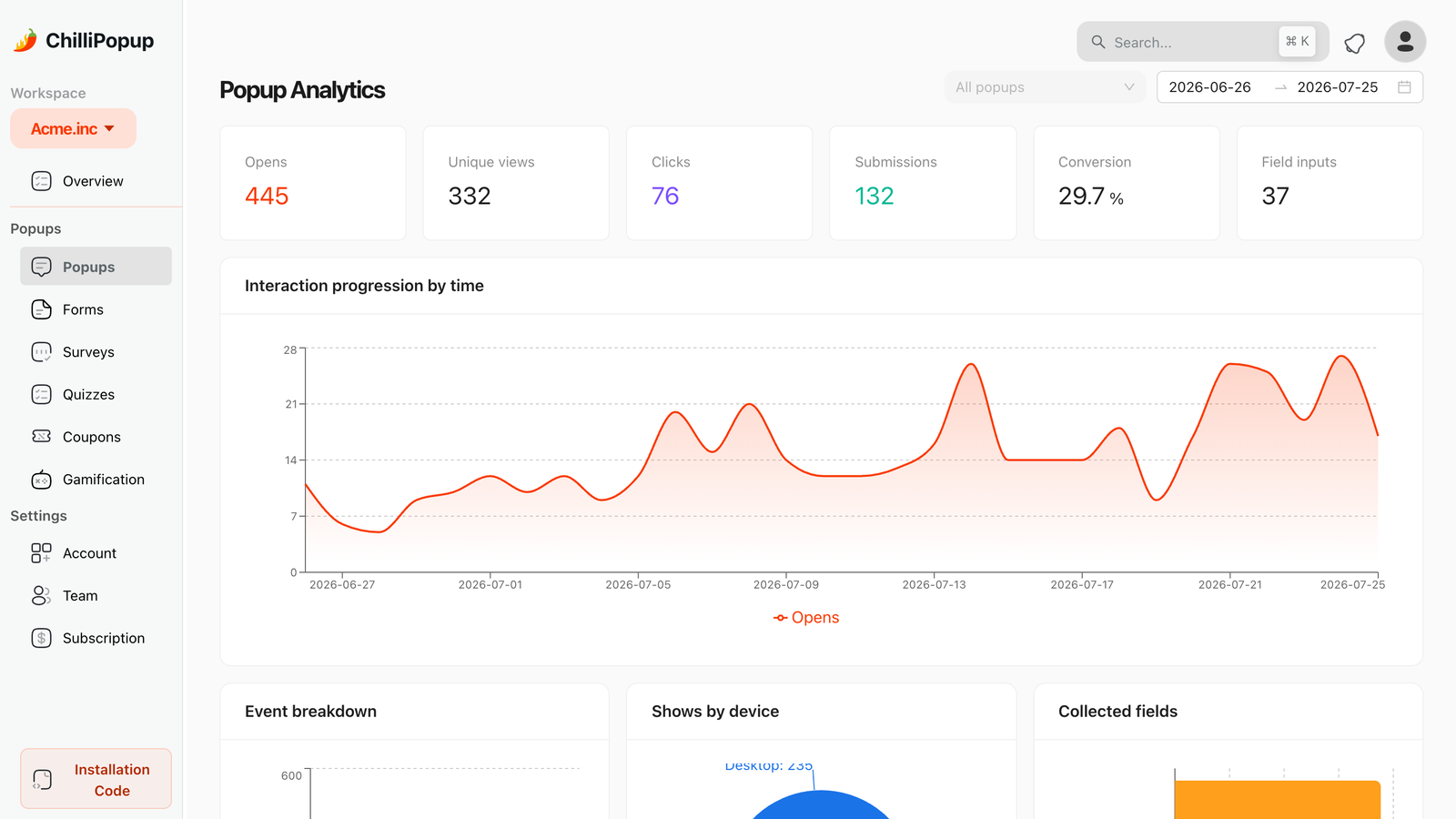
Fatigue has a shape: the view line keeps climbing while the conversion line drifts down.
Six frequency mistakes
- Shipping the test setting. "All pages, all the time" is for building, not for visitors.
- Leaving the conversion switch on. Subscribers being asked to subscribe is the fastest way to look like you do not know who they are.
- Counting campaigns instead of interruptions. The visitor experiences the total.
- The same cadence for every campaign. A deadline offer and an evergreen signup have different shelf lives and should have different cooldowns.
- Frequency as a substitute for relevance. A cap makes a bad popup rarer, not better. If the offer is wrong, capping it just spreads the disappointment out.
- Never walking the site. Nobody on your team experiences the site the way a first time visitor does — unless they deliberately go and do it.
Set it up in five steps
Fifteen minutes for a whole account. If the pixel is not installed yet, start with the install guide.
1. Switch the display frequency rule on
Open the campaign's display rules and enable it. The audience and conversion controls only appear once it is on — which is why so many campaigns are running without them.
2. Pick a cadence that matches the offer's shelf life
Evergreen signup: once every few days. Deadline campaign: once a day. Cart utility: every visit. When unsure, pick the longer cooldown — you can always tighten it.
3. Turn off "show again after conversion"
Unless the campaign is a recurring utility, this is a one-click improvement to the experience of everyone who already trusted you.
4. Choose the audience deliberately
New for welcome offers, returning for second asks, everyone for real deadlines. Set the day windows that define new and returning for your traffic.
5. Count the interruptions in a five-page visit
Fresh private window, five pages, count. More than one? Separate the campaigns by page targeting until it is one.
Related reading
Frequently asked questions
How often should a popup show to the same visitor?
For evergreen list building, once every few days is a safe default — often enough to catch someone in a buying mood, rare enough that it never becomes wallpaper. For a genuine deadline campaign, once a day is defensible. Every visit is only appropriate for a small bar or a cart reminder that carries real utility.
What happens if I do not set a frequency rule at all?
In ChilliPopup a popup with no explicit frequency still will not repeat within a session — there is a built-in once-per-session cap. But that cap resets with every new session, so a visitor who comes back tomorrow meets it again, and again the day after. Setting an explicit frequency replaces that cap with your own cadence.
Should a popup show again after someone converts?
Almost never. Turning off "show again after conversion" stops the campaign appearing to anyone who already submitted it, which is what prevents the most damaging popup experience there is: asking an existing subscriber to subscribe. The exceptions are recurring utilities like a restock alert, where a second submission is genuinely useful.
Can two popups show at the same time?
Not in ChilliPopup. If several triggered campaigns become ready at once, only one overlay is displayed and the rest wait in a queue, ordered by type — popups first, then forms, then surveys, then quizzes — with the next appearing only when the current one is dismissed. That protects the visitor from a stack, but it does not stop you from queueing three interruptions into one visit, which is your job to avoid.
Does the frequency cap follow a visitor across devices?
No. Frequency, visit counts and conversion markers live in the visitor's own browser storage, so the same person on a phone and a laptop counts as two visitors, and clearing site data or browsing privately resets everything. Design for it: never build a campaign that would be embarrassing if it were shown from the start again.
How do I know if I am showing too many popups?
Three signals. Conversion rate falls while views keep rising — the definition of fatigue. Mobile conversion drops far below desktop, which usually means reflexive dismissal. And your own walkthrough of a five-page visit produces more than one interruption. The last one needs no analytics at all, and catches the most cases.