A Fourth of July campaign is really two campaigns. The week before is a delivery race: people are buying food, decorations, outdoor gear and gifts that have to arrive in time, and your most valuable message is the shipping cut-off. The holiday itself and the days after are a different market entirely — nothing physical will land in time, so the offer has to become digital, gift-card or clearance.
Below are ten popup campaigns split across those two halves, with the trigger, the copy and the rules for each — plus an honest note on whether you should be running it at all.
Key Takeaways
- The shipping-deadline bar is the highest-value campaign of the whole sale. It's also the cheapest to build.
- Switch the offer once the cut-off passes. Promoting physical goods after the deadline generates refunds, not orders.
- Flags are optional. A long-weekend theme in your own palette works for more stores and doesn't alienate international customers.
- Keep the holiday itself light. Most of your audience is outside, on a phone, half-paying attention.
- Date-window every campaign so the sale retires itself on the sixth, without you.
The two halves of the long weekend
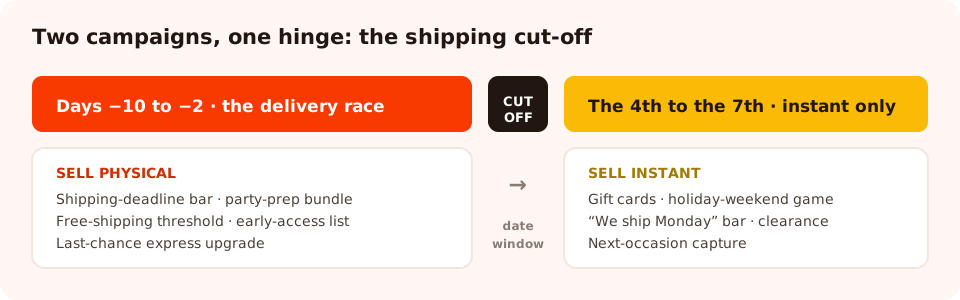
The cut-off is the hinge. Everything before it sells physical goods; everything after sells something that arrives instantly.
Get the hinge right and the rest is straightforward. Get it wrong — keep promoting a barbecue on the third of July with three-day shipping — and you'll spend the following week on refunds and complaints.
Before the cut-off: the delivery race (ideas 1–5)
1. The shipping-deadline announcement bar
Build this first. A bar at the top of every page, live from about ten days out, with a countdown:
"Order by Monday 5pm for delivery before the 4th."
It interrupts nobody, it appears on every page including deep product pages, and it converts more reliably than any discount you'll run all weekend — because it's not asking anyone to want something new, it's telling someone who already wants it that they need to act now.
2. The party-prep bundle
On collection and category pages, scroll trigger at 50–60%.
"Everything for the cookout — the set, at a set price."
Bundles beat percentage discounts for a holiday like this because the customer's job isn't "buy one thing cheaply", it's "don't forget anything". A bundle does the thinking for them and raises average order value at the same time.
3. The free-shipping threshold
In the cart and as a bar: "You're $14 away from free delivery before the 4th." The two strongest levers you have — a threshold and a deadline — in one sentence.
4. The early-access list
Ten days out, for new visitors, at 50% scroll: "Our summer sale opens 24 hours early for subscribers." Turn off "show again after conversion" so subscribers stop seeing it, and set a date window so it retires when the sale opens.
5. The last-chance exit offer
On the final day before the cut-off, exit intent on product and cart pages:
"Last day for delivery before the 4th — free express on orders over $50." Upgrading shipping
is often cheaper than discounting the product, and at this exact moment it's worth more to the
customer.
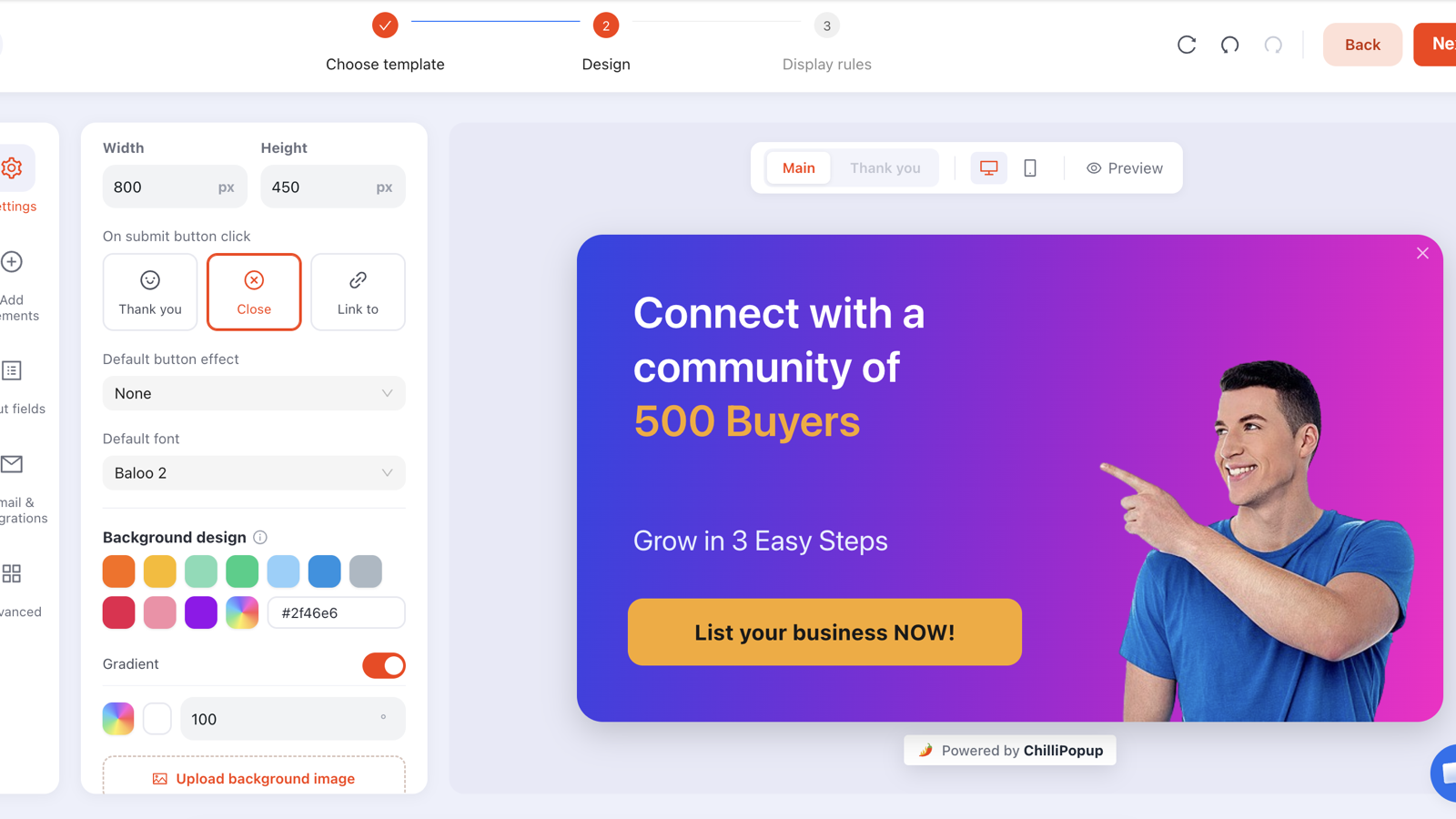
A countdown makes the deadline visible. Point it at the shipping cut-off, not at a made-up "sale ends" time.
The day and after: switch the offer (ideas 6–10)
6. The gift-card pivot
The moment the cut-off passes, the physical-goods popup should be replaced — not just paused. A
popup on the same pages, with a date window
starting the moment the other one ends:
"Too late to ship? A gift card lands in their inbox in seconds."
7. The holiday-weekend game
On the day itself, keep it light. A scratch card or spin wheel with summer prizes — free shipping, a percentage off, a free extra — works well on a phone in a backyard, which is where your audience actually is. Per-prize win chances mean the good prizes stay rare, and the outcome is decided server-side so it can't be rigged from the browser.
8. The "we're closed, here's when we ship" bar
Underrated and almost free. "Orders placed today ship Monday." Setting the expectation prevents the support tickets and the disappointed reviews that otherwise arrive the following week.
9. The post-holiday clearance
From the fifth, on summer categories, exit intent:
"Summer clearance — everything that didn't make it to the cookout." This is genuine
stock-clearing, and the honesty of the framing tends to outperform a generic percentage.
10. The next-occasion capture
The campaign almost everyone skips. For anyone who visited during the sale and didn't buy, an inline
form or a light exit-intent offer:
"Want the heads-up before the Labor Day sale?" One email field. The people who browsed a
holiday sale without buying are the warmest list you'll build all summer.
Build the shipping-deadline bar first
Announcement bars, countdowns, bundles and prize games from one editor — with date windows so each campaign hands over to the next. Free plan, no credit card required. Paid plans from $29/month.
Start free →Design: flags optional
Red, white and blue is the obvious move and often the wrong one. Three alternatives that work for more stores:
- Summer, not patriotic. Warm sun tones, outdoor photography, "long weekend" language. Fits almost any brand and reads well internationally.
- Your own palette, holiday framing. Keep your brand colours and let the copy carry the occasion. This is the safest option for anyone whose brand has a strong existing look.
- One accent, not three. If you do want the reference, a single accent element — a star, one stripe — reads as designed. All three colours at once reads as a template.
Whichever you choose, check it on a phone in sunlight. A pale summer palette that looks elegant on a laptop can be unreadable outdoors, which is exactly where your audience is on the fourth.
Copy for the weekend
| Instead of | Try | Why |
|---|---|---|
| "4th of July Sale!" | "Order by Monday 5pm to have it for the 4th" | A real deadline beats a generic sale announcement |
| "20% off everything" | "The cookout set — everything, one price" | Solves "don't forget anything", and raises order value |
| "Free shipping" | "Free express — still arrives before the 4th" | Ties the benefit to the deadline that's driving the purchase |
| "Last chance!" | "Too late to ship — but a gift card arrives instantly" | Honest about the deadline, and still offers a way through |
| "Sign up for our newsletter" | "Get the heads-up before the Labor Day sale" | A concrete, dated reason to subscribe |
The rules a five-day sale needs
Ten campaigns handing over to each other across a week only works if each one is ruled. All of these are per campaign, in display rules:
- Date windows, on everything. This is what makes the cut-off hinge work: the shipping bar ends at 5pm Monday and the gift-card popup starts the same minute, with nobody at a keyboard.
- Page targeting so the bundle offer stays on relevant collections and nothing at all appears on checkout.
- Audience — new visitors for the early-access list, everyone for the deadline bar, returning visitors for the next-occasion capture.
- Frequency — once a day. A shopper browsing twelve products over the weekend should meet each campaign once.
- Show again after conversion — off, so subscribers and buyers stop being asked.
- Device rules, because holiday traffic skews heavily to phones. Exit intent is a cursor signal and doesn't exist on mobile — use a scroll percentage or the inactivity trigger for the mobile version.
Should you run it at all?
Three cases where the answer is no, or not like this:
- Most of your customers aren't in the US. Run it as a summer sale, or target it to US visitors and leave everyone else with your normal site.
- Your product has nothing to do with the occasion. A holiday-themed popup on a B2B software site reads as filler. Skip it and keep your credibility.
- You can't hit the shipping deadline. If your fulfilment is five days and the sale is three, don't sell the promise. Run gift cards for the whole period instead — it's a smaller campaign that doesn't end in refunds.
What to measure
- Orders before versus after the cut-off, which tells you whether the deadline bar did its job.
- Average order value on bundle days compared with a normal week.
- Gift-card share after the deadline — this is the number that says whether the pivot worked.
- List growth from the early-access and next-occasion campaigns, which is what makes the next holiday cheaper.
- Campaign conversion rate. Each popup, form, survey and quiz reports its own opens, unique views, clicks, submissions and conversion rate — so next year you only rebuild the ones that earned it.
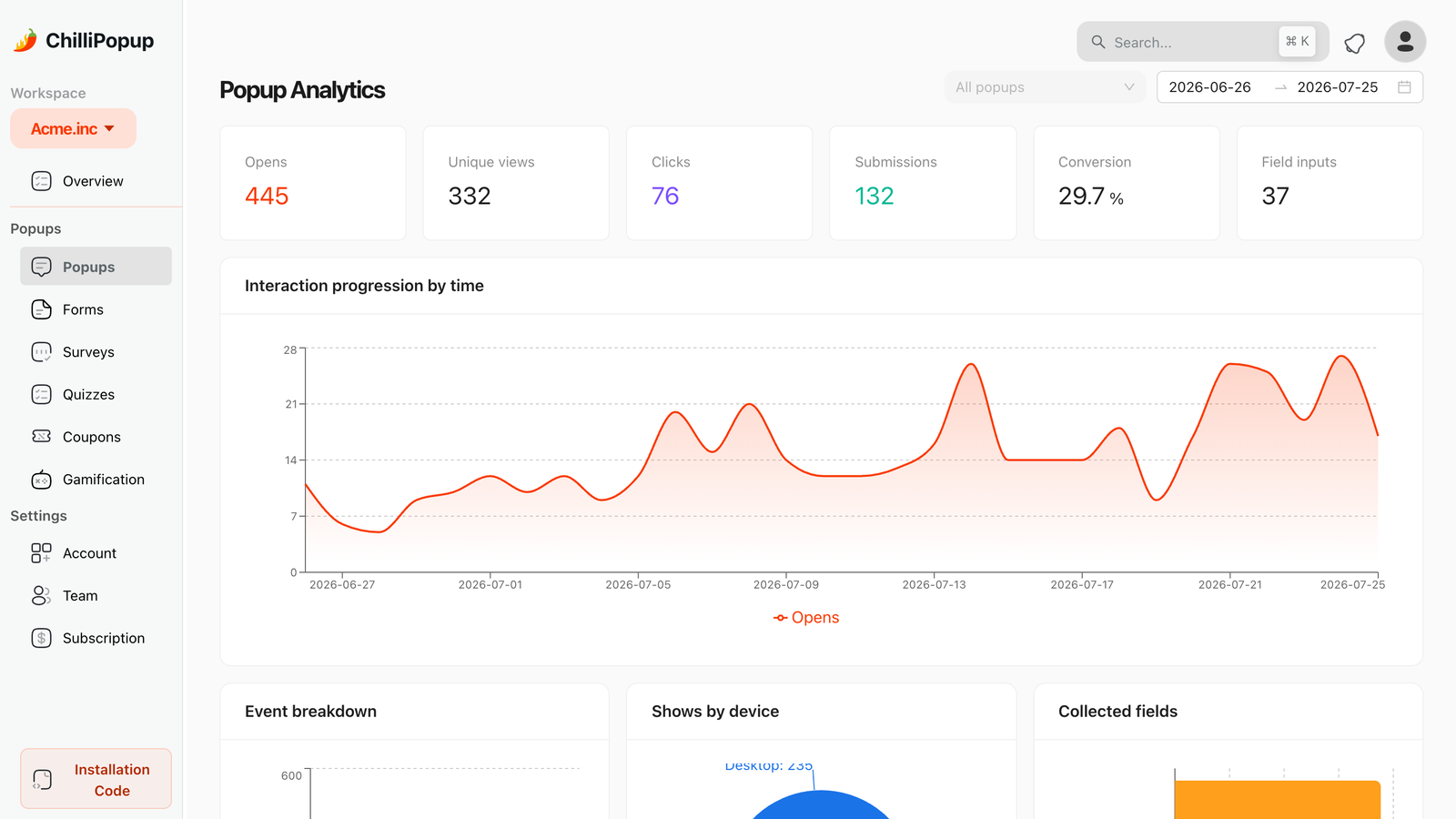
Ten campaigns, ten sets of numbers — and a shortlist for next summer.
Related reading
Frequently asked questions
When should a Fourth of July sale start?
Start the shipping-deadline messaging about seven to ten days out and the sale itself three to five days before the holiday. The most valuable single campaign is the delivery cut-off announcement, because for anything physical the deadline is what actually creates urgency.
What kind of offer works for Fourth of July?
It depends which half of the weekend you are in. Before the holiday, anything that helps someone prepare — bundles, party quantities, guaranteed delivery. On and after the day, the offer has to switch to digital, gift cards, or a clearance of summer stock, because nothing physical will arrive in time.
Should my popups use flags and patriotic colours?
Only if it fits your brand and your audience. A summer or long-weekend theme in your own palette works for far more stores than red, white and blue does, and it avoids the awkwardness for international customers. The date creates the occasion; the design does not have to.
Is Fourth of July worth running for a non-US business?
Usually not as a patriotic campaign, but often yes as a summer sale. If a meaningful share of your traffic is in the United States, run it as a targeted campaign for those visitors and leave everyone else with your normal site — device and audience rules make that straightforward.
How do I stop a holiday popup annoying repeat visitors?
Set a frequency so it shows once a day rather than every visit, turn off 'show again after conversion' so anyone who already claimed the offer stops seeing it, and give every campaign a date window so the whole set retires itself on the sixth.
What should I run on the day itself?
Something light. Most people are not at a keyboard. A single announcement bar with the last-hours deadline, and a low-effort game or a gift-card offer for the people who are browsing on a phone from a backyard, is enough — this is not the day for a full-screen overlay.