Valentine's Day is the most deadline-driven shopping moment of the first quarter and one of the least price-driven. The visitor already intends to spend; what they lack is a decision and the confidence that it will arrive on time.
Build your popups around those two gaps — help choosing, and certainty about delivery — and February stops being a discount month.
Key Takeaways
- Hard deadline, soft decision. Help them choose and promise them a date; that beats a discount.
- The gift-finder quiz is the highest-value campaign for any store selling giftable products.
- The shipping-deadline bar is the highest-value message — customers thank you for it.
- Plan the handover. The moment physical delivery becomes impossible, switch to gift cards and digital.
- Write for friends, family, pets and self-gifting too. "Someone you love" includes everyone who was already buying.
The four phases of the Valentine's season
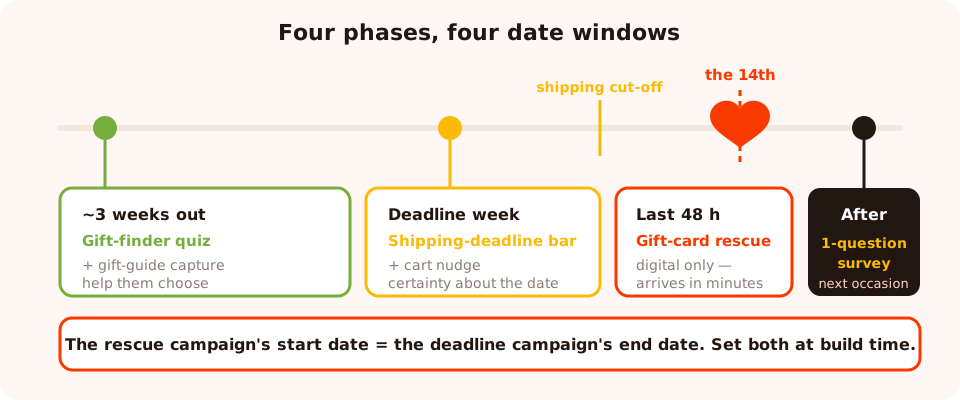
Four campaigns, four date windows. The handover at the shipping cut-off should be automatic, not manual.
| Phase | The shopper | What converts | Campaign |
|---|---|---|---|
| ~3 weeks out | Planning, browsing, undecided | Help choosing | Gift-finder quiz + gift guide capture |
| Deadline week | Decided, worried about delivery | Certainty about the date | Shipping-deadline bar + cart nudge |
| Last 48 hours | Late, slightly panicked | Something that arrives instantly | Gift-card / digital rescue popup |
| After | Bought, feeling good about it | A reason to come back | One-question survey + next-occasion capture |
Phase 1 — Help them choose
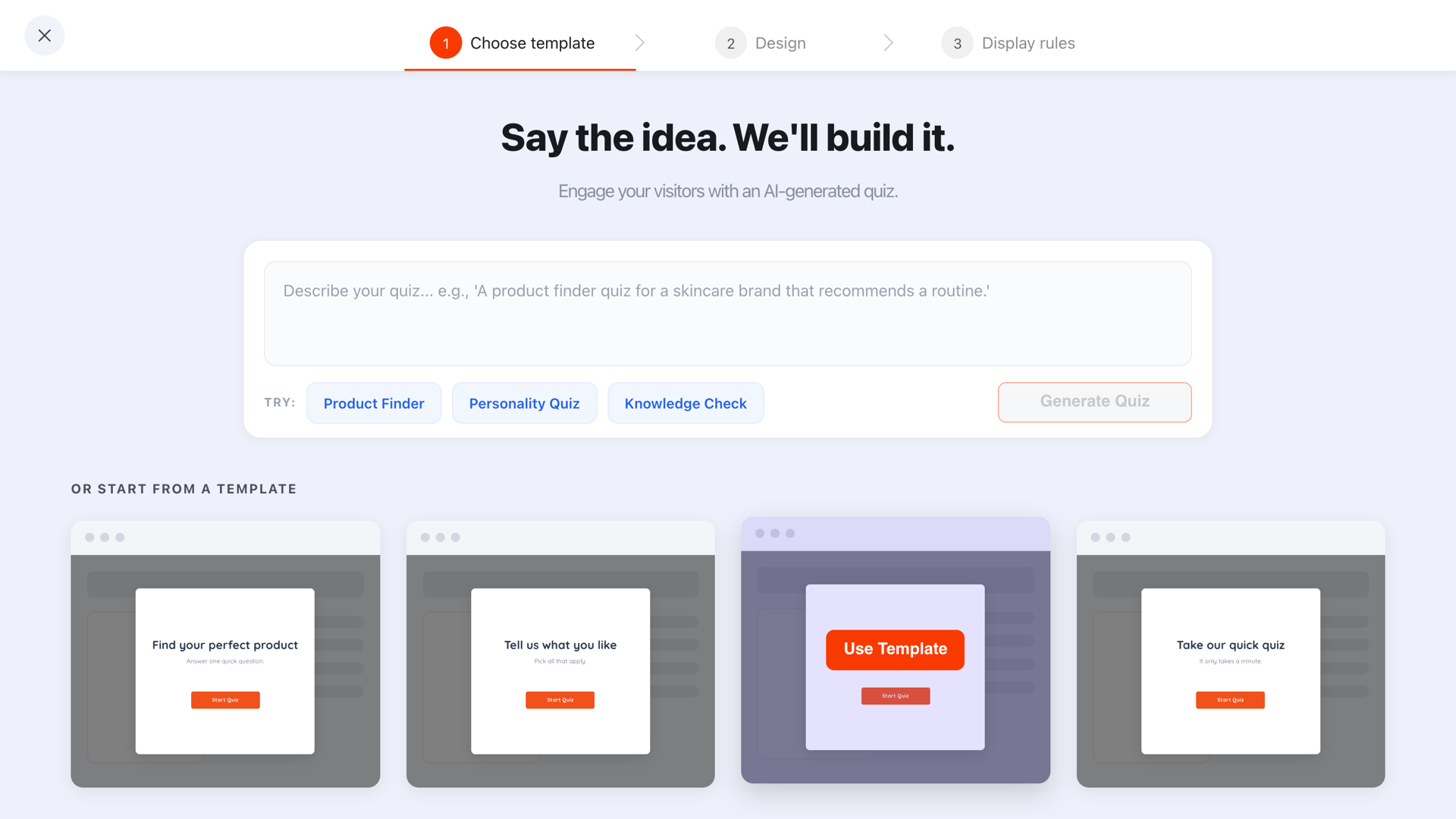
1. The gift-finder quiz
The single best Valentine's campaign for any store with giftable products. Two or three tappable questions, a shortlist at the end, and an email field to send the full list. The recommendation is what earns the address — you are not asking for an email, you are asking permission to send the answer.
Q1 — Who's it for? Partner · Friend · Family · Myself, honestly
Q2 — Budget? Under 25 · 25–50 · 50–100 · Money is no object
Q3 — They're more… Practical · Sentimental · Hard to buy for
Result: "Three things that fit" + "Send me the full shortlist" email field
Use tappable options rather than text boxes: they complete in one gesture on a phone, and they return normalised values you can segment on afterwards — which means next February you already know who buys for friends and who buys for partners.
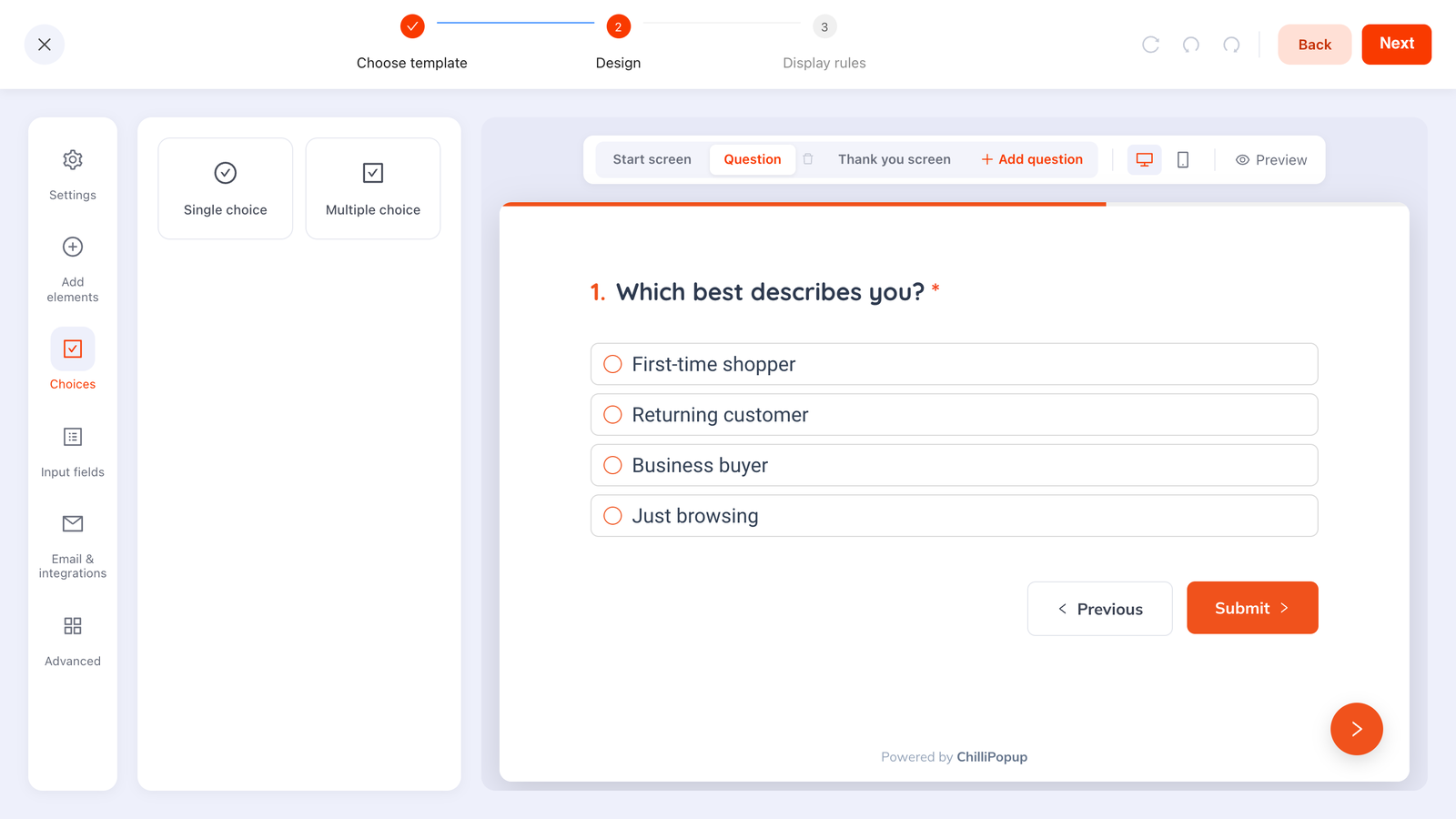
Three questions, all taps. The shortlist at the end is what makes the email address feel like a fair trade.
2. The gift-guide capture
For visitors who don't want a quiz: an exit-intent popup offering the guide itself. "Leaving without a plan? Take the gift guide — 20 ideas, sorted by budget." One email field, and the guide link on the thank-you screen so it lands immediately.
3. The budget-band popup
A slide-in on collection pages: "Everything under 50 →". No form at all. Budget is the first filter most gift shoppers apply and the one your navigation usually doesn't offer.
4. The non-couple angle
A significant share of February shopping is for friends, family, pets and the shopper themselves. You don't need a separate campaign — you need copy that doesn't assume. "For someone you love" costs nothing and excludes nobody; "for your partner" quietly tells a large group of buyers that this isn't for them.
Phase 2 — Deadline week
5. The shipping-deadline bar
The most valuable Valentine's campaign that most stores never build, and it takes ten minutes. A small bar, sitewide, carrying one fact:
Order by Tuesday 6pm for delivery before the 14th.
No discount. No form. No cleverness. It converts because it resolves the exact anxiety the shopper walked in with, and it is the one seasonal message people are actively glad to see. Get the real cut-off from whoever runs fulfilment before you write it — a deadline you miss is worse than no deadline at all.
6. The cart nudge with a date
On the cart page, inactivity-triggered: "Still deciding? This still arrives before the 14th if you order today." It converts hesitation into urgency without inventing scarcity, and it's honest — which matters, because it's checkable.
7. Free wrap or a handwritten note
A gift-specific offer that costs less than a discount and converts better in February: free gift wrap, a handwritten card, or "we'll send it straight to them". Attach it to the cart page in the deadline week.
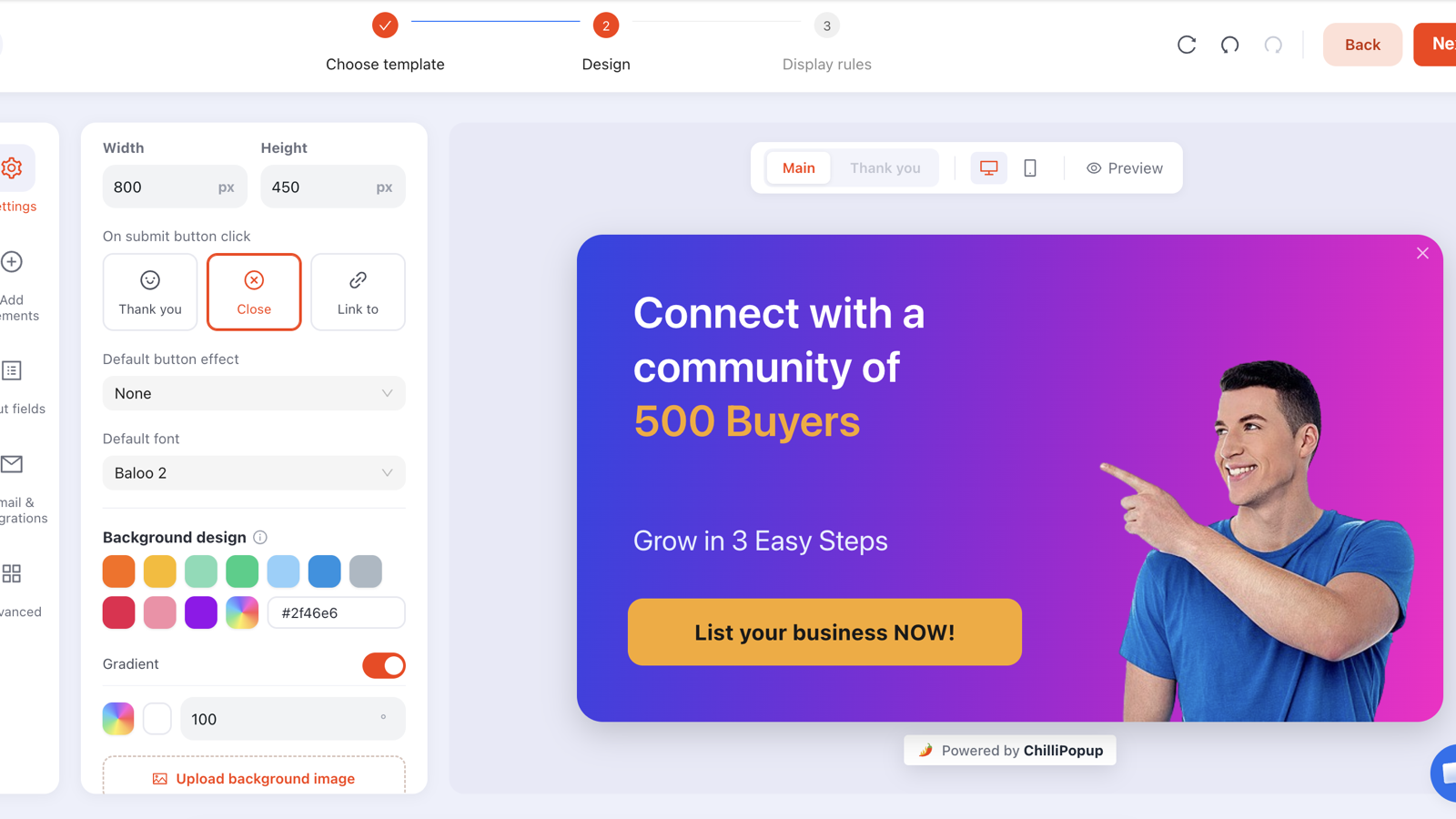
If you use a timer, point it at the real cut-off date — not a countdown that restarts for every visitor.
Phase 3 — The last 48 hours
8. The gift-card rescue
The moment physical delivery becomes impossible, the offer has to change — and this handover should be automatic. Build the rescue campaign in advance with a date window that starts when the shipping deadline ends:
Headline: Left it late? We've got you.
Support: Digital gift cards arrive by email in minutes — pick the amount, add a message,
done.
Button: Send a gift card
A store that simply goes quiet after its cut-off hands the entire last-minute audience to someone else. It is a big audience, it is highly motivated, and it is not price-sensitive.
9. The scratch card for the final push
If you do want an incentive in the last stretch, wrap it in a play rather than announcing a discount: "Scratch for your Valentine's treat." The prize can be free express shipping, which is exactly what a late shopper wants more than money off. More mechanics in the gamified popup ideas guide.
Phase 4 — After the 14th
10. The follow-up that sets up the next occasion
Two days later, on the order-confirmation page or as a returning-visitor campaign for people who bought: one question — "Did it arrive on time?" — and one offer: "Want a reminder before the next occasion? Tell us the date."
That second half is the quietly valuable part. A birthday or anniversary date collected in February is a campaign you can run all year, and it's the rare piece of personal data a customer volunteers happily because the benefit to them is obvious.
The display rules behind the season
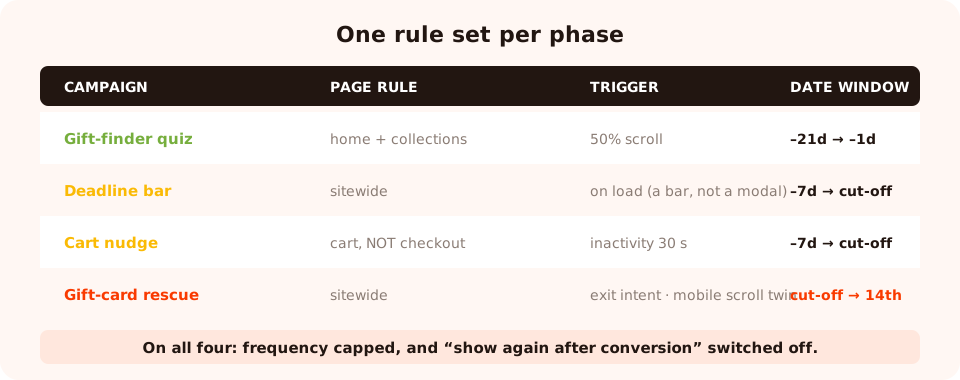
Four campaigns, four date windows. The handover happens because the dates were set at build time.
- Date windows are the whole plan. Each phase gets a start and an end, and the rescue campaign's start is the deadline campaign's end. Set them together and the season runs itself.
- Page targeting. The quiz on collection and homepage, the deadline bar sitewide, the cart nudge on the cart page only, the follow-up on the confirmation page.
- Never inside checkout. Rule the cart-page campaigns to does not contain your checkout path — nothing good happens when you interrupt someone entering card details.
- Device. Exit intent for desktop, a scroll or inactivity trigger for the mobile twin. Gift shopping skews heavily to phones, so the mobile version isn't optional.
- Frequency, and "show again after conversion" off. February shoppers visit repeatedly while they decide. Respect a dismissal.
The end date matters more than usual here. A Valentine's popup still running on February 20th is the most visible seasonal mistake in ecommerce. Set the window when you build it, not when you remember.
Copy that works in February
| Instead of | Write | Why |
|---|---|---|
| Valentine's Sale — 20% off! | Order by Tuesday 6pm and it arrives before the 14th | February anxiety is timing, not price |
| The perfect gift for your partner | The right gift for someone you love | Includes friends, family, pets and self-gifting |
| Shop our Valentine's collection | Not sure what to get? Answer 3 questions. | Solves the actual blocker |
| Last chance! | Too late to post — digital gift cards arrive in minutes | Gives the late shopper a real option |
| Subscribe for Valentine's offers | Send me the gift shortlist | The reward is the recommendation, not a mailing list |
Six mistakes in Valentine's campaigns
- Leading with a discount. Deadline-driven shoppers want certainty and a good idea, in that order.
- No shipping deadline anywhere on the site. The cheapest, highest-converting message of the season, and it's usually missing.
- Going quiet after the cut-off. The last 48 hours are a large motivated audience that someone is going to serve.
- Assuming every shopper is buying for a partner. Copy that excludes people costs sales you never see.
- A timer that resets per visitor. Point it at the real date; February shoppers check twice.
- No end date. Everything about February is dated. Your campaigns should be too.
Build the Valentine's set in ChilliPopup
An hour for all four phases. One pixel serves every campaign — see the install guide if it isn't on your site yet.
1. Build the gift-finder quiz
Two or three tappable questions, a shortlist result, one email field. Homepage and collection pages, from about three weeks out.
2. Get the real shipping deadline
Exact date and time, from whoever runs fulfilment. Everything in phase two depends on this being right.
3. Build the deadline bar
Sitewide, no form, one sentence. Date window: from a week out to the moment the cut-off passes.
4. Prepare the rescue campaign now, not later
Gift cards or digital products, with a date window that starts exactly when the deadline bar's ends. That way the handover happens whether or not anyone is at a desk.
5. Add the follow-up
One question plus a next-occasion date capture, on the confirmation page in the days after.
Help them choose, and promise them a date
Quizzes, bars, popups and prize games from one editor — with date windows, page rules and analytics built in. Free plan, no credit card required. Paid plans from $29/month.
Start free →Related reading
Frequently asked questions
What is the best Valentine's Day popup?
A gift-finder quiz, for almost every store that sells giftable products. Valentine's shoppers have already decided to buy and are stuck on what — so two or three tappable questions ending in a shortlist converts far better than another discount, and it collects an email address in exchange for genuine help.
When should Valentine's popups go live?
In four phases. The gift guide and quiz go live around three weeks out, the deadline messaging in the last week, a last-minute rescue campaign in the final 48 hours, and a short post-Valentine's follow-up afterwards. Each one needs its own date window, set when you build it.
What should a Valentine's shipping deadline popup say?
The exact date and time, and what happens after it: "Order by Tuesday 6pm for delivery before the 14th." No discount, no form, no cleverness. It converts because it removes a real anxiety, and it is the one seasonal message customers actively thank you for.
How do I sell after the shipping deadline has passed?
Switch the campaign. Once physical delivery is impossible, the offer becomes gift cards, digital products, printable vouchers or in-store collection. A store that goes quiet after its cut-off leaves the entire last-minute audience — which is a large and highly motivated one — to somebody else.
Should Valentine's campaigns only target couples?
No, and stores that assume so leave money behind. A significant share of February shopping is for friends, family, pets and the shopper themselves. Writing "for someone you love" instead of "for your partner" costs nothing and includes everyone who was going to buy anyway.
Do I need to discount for Valentine's Day?
Rarely. February shoppers are deadline-driven rather than price-driven — they need the right gift to arrive on time far more than they need 15% off. Free gift wrap, a handwritten note, guaranteed delivery and a good recommendation all convert better and protect your margin.