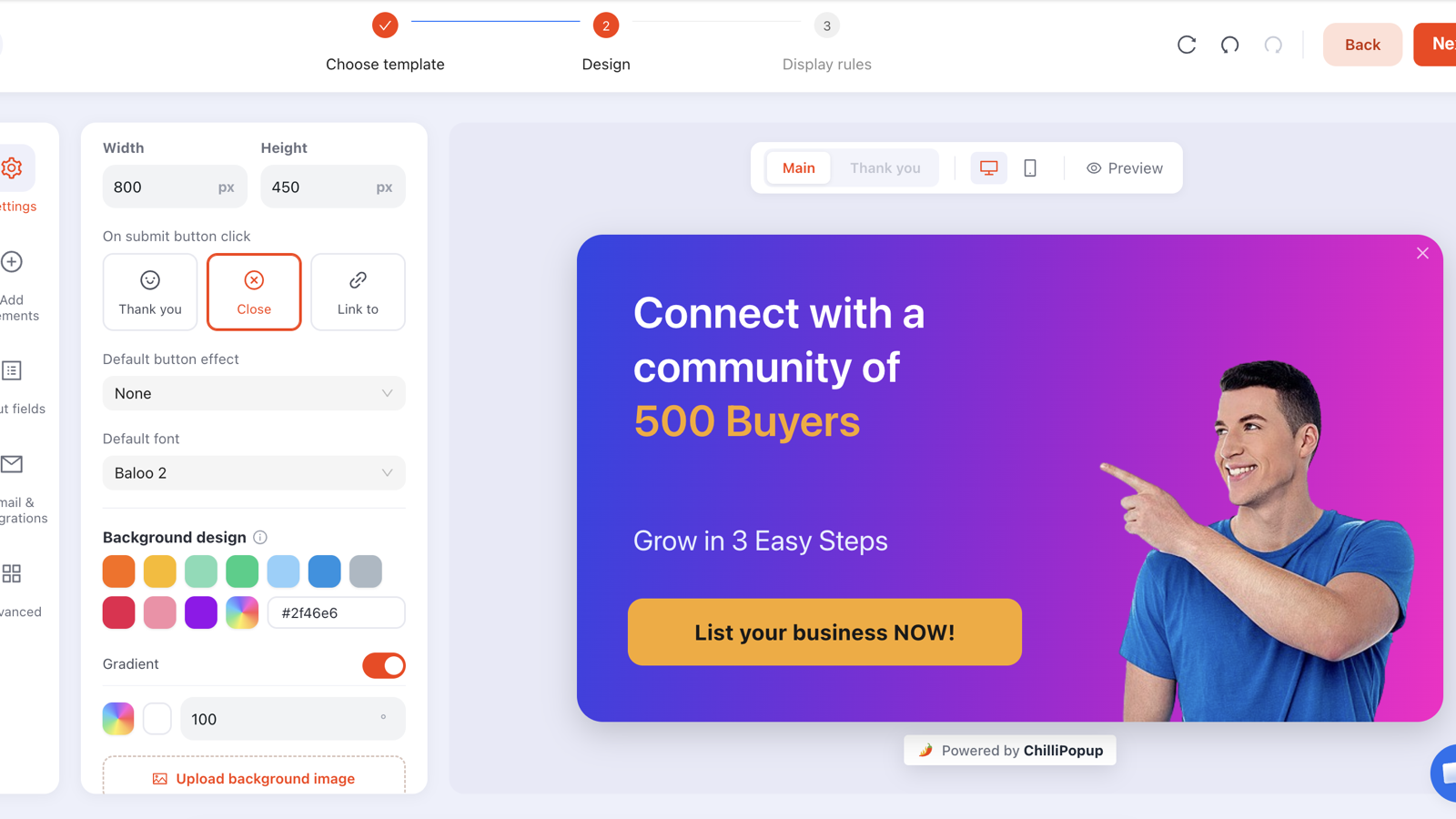
Paid traffic behaves differently from every other visitor you get. It arrives once, decides fast, and almost never comes back on its own. So the popup rules that suit a returning blog reader — wait for the second visit, ask on page three — quietly waste the click you just paid for.
The fix is two decisions: make the popup continue the ad's promise rather than introduce a new one, and target it by the UTM parameter so each campaign gets its own. Both take about five minutes.
Key Takeaways
- One visit is all you get. Capture during this session or pay again to reach the same person.
- Target by UTM. URL rules read the whole address including the query string, so
utm_campaign=becomes a targeting key. - Continue the ad, don't contradict it. A popup offering something unrelated to the ad throws away the message match you paid for.
- Never fire on arrival. It wastes the click and it's the pattern ad platforms rate badly.
- Cold traffic wants a question, not a discount — a quiz converts feed traffic that a coupon can't reach.
Why paid traffic needs its own rules
Organic and returning traffic gives you a second chance. Someone reads a post, leaves, comes back next week, and the popup you set to fire on the second visit finally does its job. Paid traffic has no second visit — or rather, the second visit is another ad impression you pay for.
Three consequences follow, and they change every rule you'd otherwise use:
- Triggers have to fit one session. Page-count and returning-visitor rules will simply never fire for most paid clicks.
- Relevance is already established. You know what the ad said, so you know what the visitor expects. That's an advantage no organic campaign has.
- The economics are visible. You know exactly what the click cost, which makes it much easier to judge whether the capture was worth it.

Organic traffic gives you a second chance. A paid click gives you forty seconds.
Target by UTM: one popup per ad campaign
This is the technique most people miss. Page-targeting rules match against the full URL, including the query string — and every properly tagged ad link carries its campaign in that query string. So the UTM you already use for reporting doubles as a targeting key.
https://yourstore.com/collections/new
    ?utm_source=instagram
    &utm_medium=paid
&utm_campaign=spring-sale| Who you want to reach | Rule | Value |
|---|---|---|
| Everyone from one campaign | URL contains | utm_campaign=spring-sale |
| Everyone from one channel | URL contains | utm_source=instagram |
| All paid traffic | URL contains | utm_medium=paid |
| Everyone who did not arrive from an ad | URL does not contain | utm_ |
Two things to know before you rely on it. First, the parameters only survive as long as the visitor stays on the landing URL — click through to a second page and the query string is usually gone, so UTM-targeted popups should fire on the landing page. Second, several page rules on one campaign are combined with OR, not AND: adding a second rule widens the match. When you need precision, use one well-chosen rule.
The payoff is that every ad can have its own on-site follow-through. The visitor who clicked "20% off swimwear" meets a popup about swimwear; the visitor from the brand-awareness campaign meets the newsletter. Same site, same script, different conversation.
Match the promise the ad made
Message match is the whole game. A visitor clicked because something specific caught them — a product, a price, a claim. If the popup that appears twenty seconds later talks about something else entirely, you have spent money to create a mismatch.
| The ad said | Popup that wastes it | Popup that continues it |
|---|---|---|
| "20% off your first order" | "Join our newsletter" | "Here's your 20% code — where should we send it?" |
| "The 2-minute skincare quiz" | "Get 10% off" | "Take the quiz — 4 questions, then your routine" |
| "Free shipping this week" | "Subscribe for updates" | "Free shipping ends Sunday — want a reminder?" |
| "See how it works" (software) | "Book a demo" | "Want the 3-minute walkthrough by email?" |
Notice the pattern in the right-hand column: the popup asks for the next step, not a bigger one. The ad bought you attention, not commitment.
Four popups worth running on paid traffic
1. The offer completion
For campaigns that promised a discount or a resource. Exit intent on desktop, 50% scroll on mobile, targeted at the campaign's UTM. It hands over what the ad promised in exchange for an email — and the code appears on the thank-you screen immediately, because a paid visitor will not go and check their inbox.
2. The cold-traffic quiz
For feed traffic that never asked to see you. A one- to three-question quiz — "find your shade", "which plan fits", "what's your skin type" — converts where a discount doesn't, because it asks for curiosity rather than money. The answer also segments them for the follow-up email.
3. The exit catch
The universal one. The visitor is leaving anyway, so this costs nothing: the lowest-commitment ask you have, with a visible decline link. On paid traffic this is often the single highest-value campaign on the site, because every capture is a click you don't have to buy twice.
4. The retargeting welcome
For traffic from retargeting ads — people who have been here before. Target
utm_campaign=retargeting and change the message accordingly: no introductions, straight to the
thing they looked at, or a reason to finish. If they abandoned a cart, that's a
cart conversation, not a welcome.
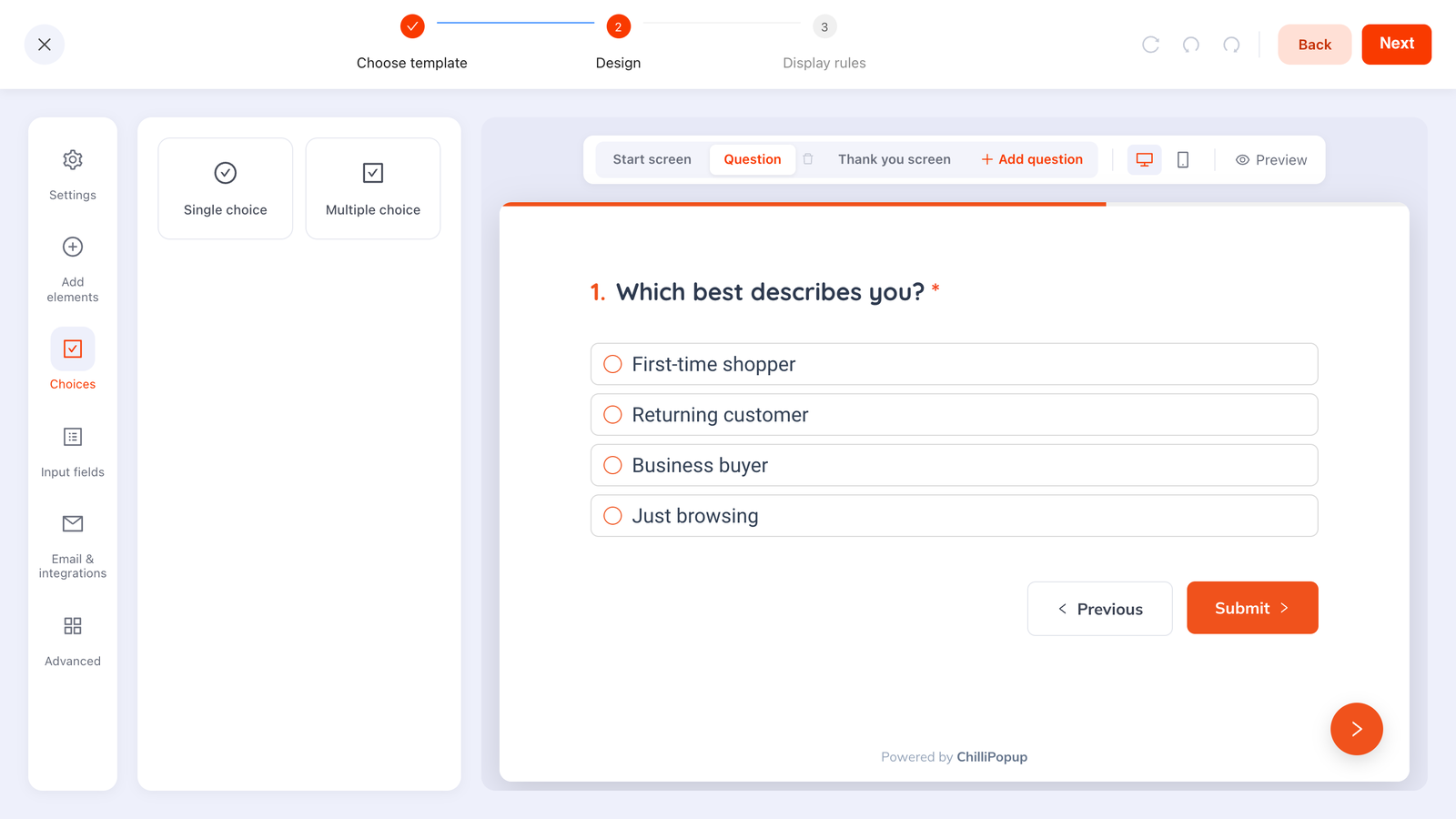
Cold traffic answers questions long before it accepts offers.
Warm and cold need different treatment
| Cold (feed, discovery, prospecting) | Warm (search, retargeting, brand) | |
|---|---|---|
| Mindset | Wasn't looking for you | Actively evaluating |
| Best ask | A question or a guide | The offer, directly |
| Trigger | Scroll or 15–20s delay | Exit intent |
| Fields | One, or none until the end | One, sometimes two |
| Tone | Curiosity | Reassurance and urgency |
| What kills it | Asking for a purchase decision | Wasting their time re-introducing yourself |
Worked example: an Instagram campaign for a store
A skincare brand runs a prospecting campaign to a collection page. Cold audience, mostly mobile, average session under a minute, purchase rate low.
The popup. Fires at 50% scroll, targeted at utm_source=instagram.
"Not sure which one is for you?"
"Three questions. We'll tell you exactly what to start with — and send the routine to your inbox."
[ Start the quiz ] "No thanks, I'm browsing"
The rules. Page targeting: URL contains utm_source=instagram. Trigger: page
scroll 50%, with exit intent added for the desktop minority. Frequency: once per session. Show again after
conversion: off.
Why it works. Nobody scrolling a feed at 11pm has decided to buy a serum. But plenty of them will answer three questions about their skin — and at the end of those questions you have an email address, a segment, and permission to make the sale over the next fortnight instead of in the next forty seconds.
Don't sabotage the ad you paid for
Ad platforms judge landing page experience, and the worst pattern is well known: an overlay that covers the content the ad promised, on mobile, immediately on arrival. It's also just bad economics — you bought attention and spent it on an interruption.
Four rules keep you clear:
- Let the page render and be read first. Delay, scroll or exit — never on load.
- Keep mobile popups small. Leave the promised content visible behind them.
- Make dismissal obvious. A visible close control and a text decline link.
- Show it once. Once per session is plenty on a visit that lasts one session.
The same principles apply to search visibility, and they're covered in more depth in do popups hurt SEO.
The maths that decides whether it worked
Paid traffic is the one place where popup value is genuinely calculable, because you know the input cost. Take one campaign over one month and write down four numbers:
- Ad spend and clicks — from your ad platform.
- Popup views and submissions — from the campaign's own analytics.
- Same-session orders — from your store.
- What a captured lead is worth to you — your own follow-up conversion rate times average order value. If you've never worked this out, do it once; it changes how you read everything else.
Spend divided by leads gives you a cost per lead. Comparing that against lead value is the honest test — and it's the reason campaigns that look unprofitable on same-session revenue often aren't. You captured people; you just haven't sold to them yet.
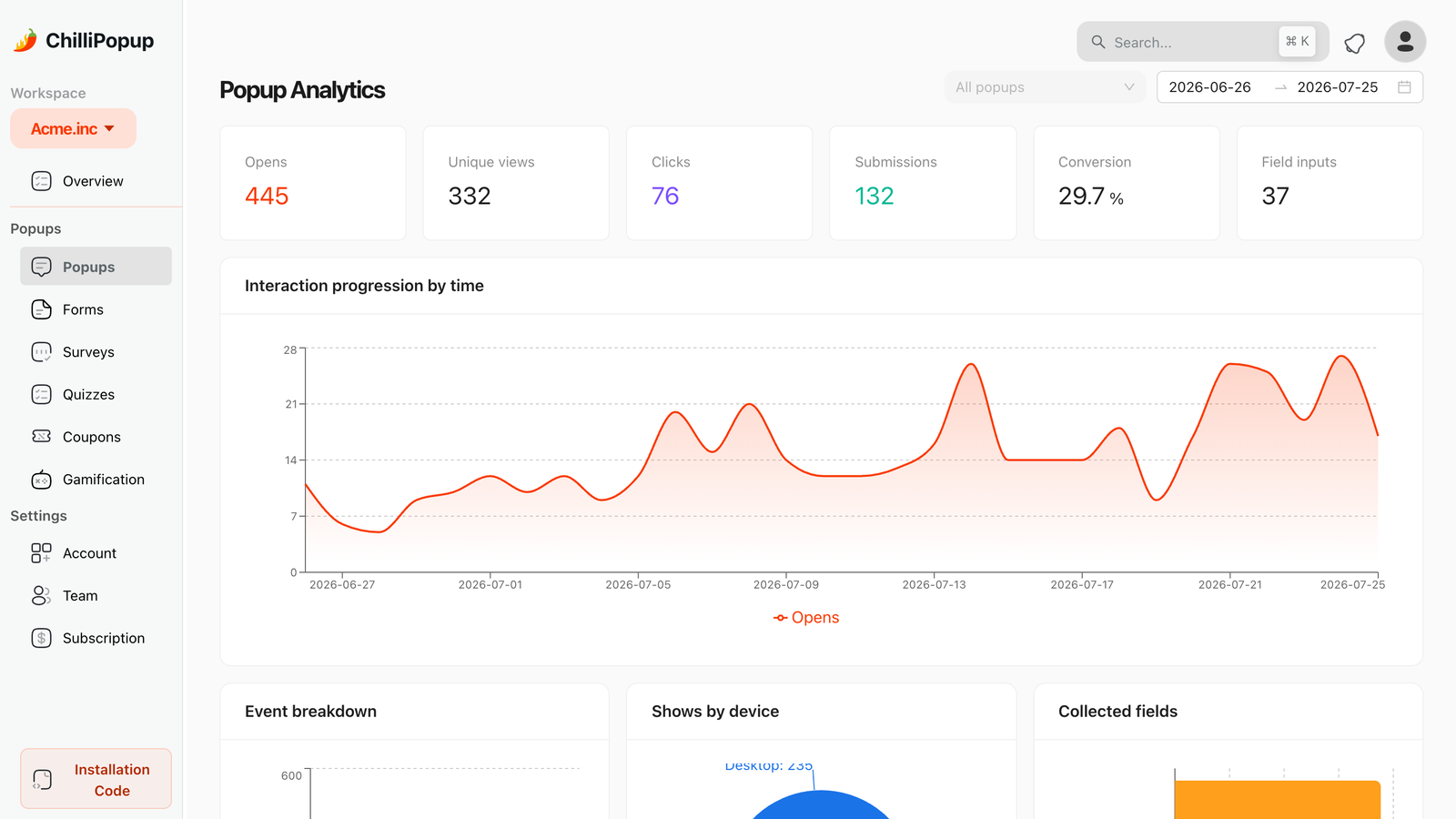
Per-campaign views and submissions are the numerator; your ad platform has the denominator.
Six mistakes that waste ad spend
- The same site-wide popup for every campaign. You tagged your ads for reporting; use the tags for targeting too.
- Firing on arrival. Wastes the click and risks how the platform rates your page.
- Offering a discount to cold traffic. They haven't decided they want the product, so a price cut answers a question nobody asked.
- Waiting for a second page view. On paid traffic, that trigger fires for almost nobody.
- Sending the reward only by email. A single-session visitor won't go and get it. Show it on the thank-you screen.
- Judging the campaign on same-session sales. The captured leads are part of the return, and ignoring them makes profitable campaigns look like failures.
Set it up in 35 minutes
1. Check your ads are tagged
Every paid link needs utm_source and utm_campaign at minimum. Without them there
is nothing to target on.
2. Build one popup per promise
Not per ad — per promise. Three ad sets selling the same offer share one popup. Start free if you need an account.
3. Target the UTM
Page targeting → URL contains → utm_campaign=your-campaign. One rule, not three.
4. Set a single-session trigger
Exit intent for desktop, 50% scroll or a 15–20 second delay for mobile. Frequency once per session, show-again-after-conversion off.
5. Do the cost-per-lead maths after two weeks
Spend ÷ leads, against what a lead is worth. Then change one thing — usually the offer, not the trigger.
Stop paying twice for the same visitor
Give every ad campaign its own popup, targeted by UTM, built in minutes. Free plan, no credit card required. Paid plans from $29/month.
Start free →Related reading
Frequently asked questions
Should you show a popup to paid traffic?
Yes, but later in the visit and matched to the ad. Paid visitors are usually single-session: if you do not capture some way to reach them before they leave, the click is gone for good. What you must not do is cover the page with an unrelated offer the instant they arrive — that wastes the click and can hurt how ad platforms rate your landing page.
How do you show a different popup for each ad campaign?
Target the UTM parameter. Page-targeting rules match against the full URL including the query string, so a rule of “URL contains utm_campaign=spring-sale” shows a popup only to visitors who arrived from that campaign. It is the simplest way to give every ad its own on-site follow-through.
Do popups hurt ad performance or Quality Score?
An intrusive one can. Ad platforms assess landing page experience, and a popup that blocks the content your ad promised — especially on mobile, immediately on arrival — is exactly the pattern that gets judged badly. A delayed, easily dismissed popup that continues the ad's offer does not have that problem.
What is the best popup for cold traffic?
Something smaller than a purchase. Cold visitors from social feeds did not go looking for you, so a discount often lands before they have decided they want anything. A one-question quiz, a guide, or a “find your size or style” helper converts better because it asks for engagement rather than money.
When should the popup fire on paid traffic?
Exit intent on desktop, and a scroll of roughly half the page or a 15–20 second delay on mobile. Paid visits are short, so waiting for a second page view usually means waiting forever — but firing on arrival wastes the click you just bought.
How do you measure whether the popup paid for itself?
Compare your ad spend against everything the click produced, not just same-session sales: divide spend by the number of leads captured to get a cost per lead, then judge that against what a lead is worth to you once your email follow-up runs. A campaign that looks unprofitable on same-session revenue is often profitable once captured leads are counted.