The best back-to-school popups match the phase of the season, not the calendar date. Six weeks out, the shopper wants help planning. Two weeks out, they want a bundle and a delivery date. Two weeks after term starts, they want the one thing that broke — and almost nobody is still running a campaign for them.
Below are eleven popups covering all three phases, each with sample copy and the display rules that put it in front of the right visitor. Build them in one afternoon, schedule the dates, and the season runs itself.
Key Takeaways
- Three shoppers, three campaigns. The planner, the peak-week buyer and the post-term replacer want completely different things.
- Lead with help, not with a discount. The earliest campaign of the season should build a list, not cut a price.
- Bundles beat blanket percentages. Parents are buying multiples; reward the basket instead of discounting every line.
- Schedule the dates in the rules, so campaigns switch themselves off when the season ends.
- The two weeks after term starts are the cheapest attention of the whole season.
The back-to-school season has three phases
Treating the whole thing as one sale is the mistake that flattens most back-to-school campaigns. The same 15%-off popup runs for six weeks, converts well for ten days, and irritates everyone else.

Six weeks, three shoppers. Each phase needs its own offer and its own trigger.
| Phase | Who is browsing | What they want | What to put in the popup |
|---|---|---|---|
| Planning ~6 to 3 weeks out |
Organised parents, teachers, students setting up | Certainty. A list, a size guide, a plan | A checklist, a quiz, early access — capture the email |
| Peak ~2 weeks out to week 1 |
Everyone, urgently | Speed, bundles, a delivery date they can trust | Bundle offers, thresholds, shipping cut-off countdowns |
| Recovery weeks 1 to 3 of term |
The people whose plan did not survive contact with reality | The specific missing thing, fast | Replacements, restocks, "forgot something?" reminders |
Term dates move by country and even by district, so treat the week numbers as relative rather than absolute — count backwards from your own market's first day of term and the phases land correctly wherever you sell.
Planning phase: build the list before the rush (ideas 1–4)
1. The school-year checklist
The single highest-value back-to-school popup, and the one most stores skip because it does not discount anything. Offer a printable or emailed list of everything a child in a given year group actually needs — and collect the email to send it.
"Term starts in six weeks. Get the year-by-year checklist so you only buy it once —
delivered to your inbox today."
One email field. Exit intent on desktop, 50% scroll on mobile. New visitors, once every seven
days.
2. The "what do you need?" quiz
Three tappable questions — year group, what they still need, when term starts — and you have both an address and a segment. A one-tap answer gives you a clean value you can route on, which a free-text box never will. Build it in the quiz builder and let the result page recommend the right bundle.
3. Early access to the range
"Our back-to-school range drops on the 1st. Want first pick of the sizes?" Scarcity that is completely true: the popular sizes really do go first. This one converts unusually well because it costs the visitor nothing and solves a real fear.
4. The teacher and classroom list
A separate campaign for a separate buyer. Teachers buy in bulk, buy early and buy annually — and they are usually browsing the same category pages as parents. Target the same URLs, ask one qualifying question, and offer whatever bulk terms you can honour.
Peak phase: convert the rush (ideas 5–8)
5. The bundle upsell
Parents are buying five things anyway. A bundle price rewards that instead of discounting each line: "Build the full kit — save 20% when you take all five." Trigger it on the category page after a few seconds, or on exit intent from a product page.
6. The free-shipping threshold nudge
The most useful number in the store during peak week. Keep it small and quiet — a corner popup or a bar, never a full-screen overlay covering the add-to-cart button. See the announcement bar guide for the format.
7. The delivery cut-off countdown
"Order by Thursday 3pm to have it before the first day." A countdown against a real shipping deadline is the most honest urgency there is, and parents genuinely need the information. Point it at a date you will actually meet.
A countdown that resets on every visit is a lie the visitor will spot. Anchor it to the real cut-off, and let the campaign's date window end it. Once someone has seen a fake deadline from you, every future one converts worse.
8. The uniform and size-guide rescue
Sizing kills conversion on school clothing more than price does. A popup on your uniform category offering the fit guide, the "runs large" note, or a free exchange promise removes the objection at exactly the moment it appears — and the exchange promise costs you less than the abandoned basket does.
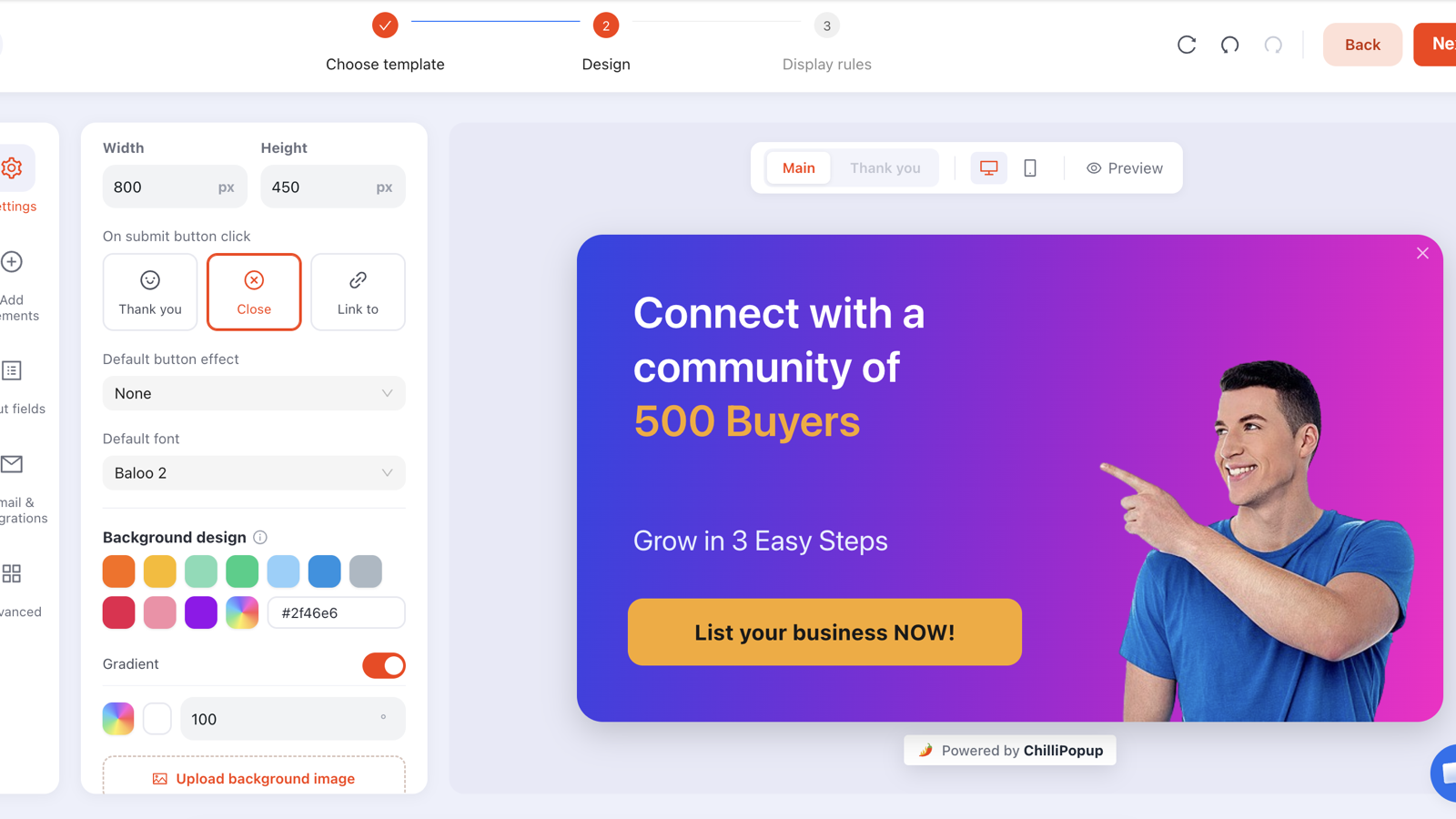
Each campaign is one design plus one set of display rules. Duplicating a working popup is usually faster than starting from a template again.
Recovery phase: the campaign nobody runs (ideas 9–11)
9. "Forgot something?"
Two weeks into term, run a returning-visitor popup that simply asks. "Two weeks in — what's already missing? Free delivery on replacements this week." The intent is enormous and the competition for attention has completely moved on.
10. The restock and lost-property list
Water bottles, lunch boxes, gym kit, chargers. These items are lost, broken or outgrown on a predictable schedule, and a small popup on the relevant category pages catches the parent who is already looking.
11. The end-of-season clearance capture
When the rush ends, the leftover stock is a list-building opportunity rather than a margin problem. "Back-to-school leftovers, up to 40% off — the code goes to subscribers first." You clear stock and gain subscribers who will still be there next August.
The pattern worth stealing: every one of these three campaigns asks for something the visitor was going to do anyway, at the moment they were going to do it. That is why the recovery phase converts so well on so little traffic.
Set the whole season up in one afternoon
The reason most stores only run one back-to-school popup is that they build it in August and never get round to the rest. Build all of them at once instead, and let the date rules run the calendar.
| Campaign | Runs | Trigger | Audience & frequency |
|---|---|---|---|
| Checklist capture | Weeks -6 to -3 | Exit intent (desktop), 50% scroll (mobile) | New visitors, once every 7 days |
| Needs quiz | Weeks -5 to -2 | Time delay, 8 seconds, category pages | Everyone, once a day |
| Bundle upsell | Weeks -2 to +1 | Time delay, 6 seconds, product pages | Everyone, once a day |
| Shipping countdown | Final 5 days only | Immediate, as a bar | Everyone, every visit |
| Forgot something? | Weeks +1 to +3 | Time delay, 10 seconds | Returning visitors, once every 3 days |
Two rules do most of the work here. The date window in advanced targeting starts and stops each campaign on its own, so nothing runs into the wrong phase. And turning off show again after conversion means someone who took the checklist in July is not offered it again in August — they get the bundle popup instead, which is exactly the sequence you wanted.

Five campaigns, scheduled once. The season then runs without anyone remembering to unpublish anything.
Build your back-to-school season this week
Popups, quizzes, forms and prize games with date windows, audience rules and per-campaign reporting. Free plan, no credit card required. Paid plans from $29/month.
Start free →Writing for a parent in a hurry
Back-to-school copy has one unusual constraint: your reader is probably standing up, on a phone, with a child talking at them. That changes what works.
- Lead with the deadline or the saving, not the brand. "Before the first day" beats "Welcome to our back-to-school event".
- Use numbers. "Save 20% on the full kit" and "Order by Thursday 3pm" are scannable in a way that adjectives are not.
- One ask. An email field, or a single tap. Not both, and never a phone number in the same breath.
- Say what happens next. "The checklist arrives in a minute" removes the last hesitation before someone types an address.
- Make the decline link visible. A real "No thanks" costs you almost nothing and stops the popup feeling like a trap.
The popup copywriting guide goes deeper on headlines and buttons if you want the full treatment.
Six back-to-school popup mistakes
- Running one campaign for six weeks. Three phases, three offers. The same discount for the whole season converts for about ten days of it.
- Discounting before you need to. The planning shopper is not price-shopping yet. Give them a checklist and you get the address and the full-price order.
- Full-screen popups on mobile category pages. Bad experience, and a real search-ranking risk on mobile. Use a corner or bar format instead.
- Forgetting to switch it off. A "Before the first day of term!" popup running in October tells every visitor nobody is minding the shop. Set the date window.
- Ignoring teachers. A different buyer, a bigger basket, and an annual habit. One extra campaign.
- Stopping when term starts. The recovery weeks are the cheapest attention in the whole season.
What to measure, and what to keep for next year
A seasonal campaign is worth more the second time you run it, but only if you write down what happened.
- Conversion rate per phase. Compare the checklist campaign to the bundle campaign, not to each other's benchmarks — they are doing different jobs.
- Subscribers per 1,000 visits. The number that survives a traffic spike, which is exactly what a seasonal peak is.
- Which quiz answers dominated. The values collected per field tell you what people actually needed, which is next year's range plan.
- Redemptions, not just signups. A bundle code that nobody used means the bundle was wrong, not the popup.
Then duplicate the winning campaigns, change the dates, and next August takes twenty minutes instead of an afternoon. The seasonal popup calendar lists the rest of the year's moments worth planning for.
Related reading
Frequently asked questions
When should back-to-school popups start running?
Earlier than most stores think. The planning shopper starts browsing roughly six weeks before term, well before any discount is on their mind — which is why the first campaign of the season should be a list-builder, not a sale. Schedule the discount campaigns for the three weeks either side of term, and keep one running for a fortnight afterwards.
What should a back-to-school popup offer?
It depends on the phase. Early on, offer help — a checklist, a size guide, early access to the range. In the peak weeks, offer bundles and thresholds rather than blanket percentages, because parents are buying multiples anyway. After term starts, offer replacements and forgotten items.
Do back-to-school popups only work for stationery and clothing?
No. Any store with a household, student or routine-change angle has a season here: electronics, furniture and storage, food and lunch supplies, sports kit, software and courses, and services from tutoring to haircuts. The shopper is reorganising their life, not just buying pencils.
How do I stop a seasonal popup running after the season ends?
Use the date window in the advanced targeting rules. Set the start and end date when you build the campaign and the popup stops on its own — which is far more reliable than a note in your calendar to unpublish it.
Should a back-to-school popup use a countdown timer?
Only against a real deadline: a shipping cut-off, the end of a bundle price, the first day of term. A countdown that resets every visit teaches people the deadline is fake and makes every future one less effective.
What is the most overlooked back-to-school campaign?
The two weeks after term starts. Something always breaks, gets lost or turns out to be the wrong size, and almost nobody is running a popup then — so the traffic is warm, the intent is high and the competition for attention has moved on.