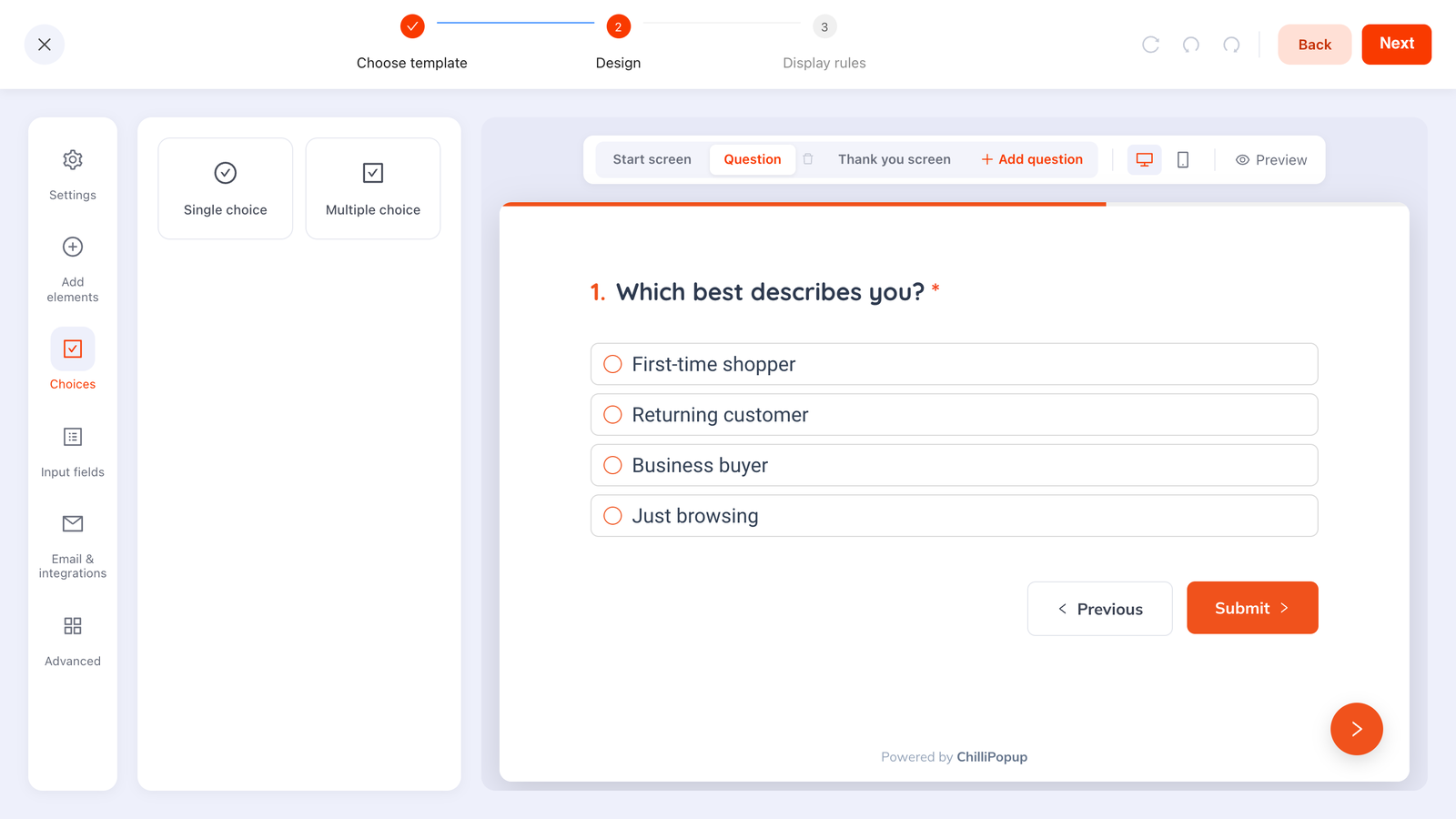
A product-market-fit survey asks one question: "How would you feel if you could no longer use this?" Three options, no scale, no neutral middle. The share of people answering very disappointed is the number everyone quotes — but the three follow-up questions are where the actual value is.
It works because it measures loss rather than approval. People will happily say they like something they would never miss. Very few will claim they would be devastated by losing a product they use once a month.
Key Takeaways
- One question, three options. Very disappointed / somewhat disappointed / not disappointed. Never a 1-to-10 scale.
- Only ask activated users. Surveying signups who never used the product measures onboarding, not fit.
- 40% is a compass, not a target — and a widely used rule of thumb rather than a law.
- Filter every follow-up answer to the very-disappointed group. That segment is your roadmap; everybody else is noise.
- Re-run it quarterly with identical wording, or the trend line means nothing.
The question, exactly
The wording is standardised for a reason: everyone who runs this survey is comparing against the same phrasing, and small changes move the result. Use it as written.
How would you feel if you could no longer use [product]?
A. Very disappointed · B. Somewhat disappointed · C. Not disappointed — it isn't that useful to me
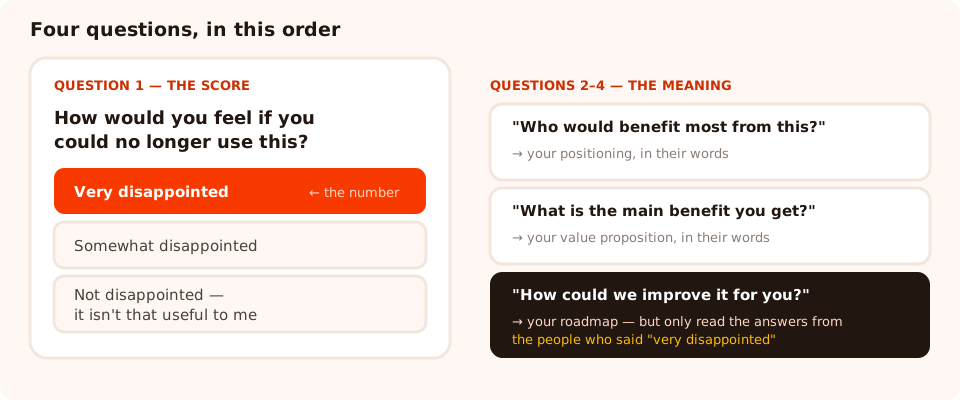
Four questions, in this order. The first gives you a number; the other three tell you what to do about it.
Three design decisions inside that question are doing real work:
- Loss, not satisfaction. "How satisfied are you?" measures politeness. "What if it were gone?" measures dependence.
- Three options, not five. There is no comfortable middle to hide in, which is exactly the point.
- The third option explains itself. "Not disappointed — it isn't that useful to me" gives people permission to be honest, which is what you need from them.
Do not "improve" the wording. Adding a fourth option, softening the third one, or converting it to a 1-to-10 scale all break the comparison — with your own previous runs and with every benchmark anyone will quote at you.
The three follow-ups
The score tells you whether you have something. These tell you what it is. Keep all three short, optional and open — this is the one place where free text beats options, because you are looking for language you have not thought of yet.
- "What type of person do you think would benefit most from this?" — your positioning, written by the people who already get it. When forty customers describe the same person in the same words, you have found your market segment and your ad copy in one question.
- "What is the main benefit you get from it?" — the value proposition in customers' own vocabulary. It is almost never the feature list you would have written, and the gap between the two is the most valuable thing this survey produces.
- "How could we improve it for you?" — the roadmap. Read only the answers from people who said "very disappointed": their requests deepen the thing that already works. Requests from the "not disappointed" group point away from your best customers, however reasonable they sound.
The segmentation rule. Every follow-up answer should be read filtered by the first answer. The same feature request means opposite things depending on whether it came from someone who would be devastated to lose you or someone who barely noticed you.
Who to ask — and who to exclude
This is where most product-market-fit surveys go wrong, and it is not a subtle mistake. The question only works on people who have actually used the product.
Write down your activation event first: they created a project, published a campaign, invited a colleague, placed a second order — whatever means "this person has experienced the thing". Then survey only those people. A signup who never got started will honestly answer "not disappointed", and they are right: they have nothing to lose. Include enough of them and you will measure your onboarding while believing you are measuring your product.
| Group | Include? | Why |
|---|---|---|
| Used the core feature more than once | Yes | They can imagine the loss, which is what the question asks about |
| Signed up, never activated | No | Their answer measures onboarding, not fit |
| Active in the last month | Yes | Recent experience, accurate memory |
| Churned six months ago | No — ask them a different question | A churn interview is a separate, more useful conversation |
| Free-plan users, if you sell to businesses | Segment separately | Mixing buyers and non-buyers produces one number describing nobody |
Where to ask it
You have three placements, and they are not equivalent:
- Inside the product, on a logged-in page. The best option by a distance — the person is currently using the thing you are asking about. Target the URL of a page that only appears after activation, and restrict it to returning visitors.
- As a link in an email to a defined list. The cleanest way to control who answers, because you pick the recipients yourself. Send it as a hosted link rather than trying to embed it in the email.
- On the marketing site. Almost always wrong. The people reading your home page are overwhelmingly not customers, so the sample is contaminated before you start.
Whichever you use, set the display frequency and turn off show again after conversion. Being asked the same soul-searching question three times in a fortnight is how a research programme becomes a support ticket.
How to build it
One naming quirk to know before you start, because it will save you ten minutes of hunting. Tappable multiple-choice options belong to quizzes; rating scales belong to surveys. The product-market-fit question needs three named options, not a scale — so build it as a quiz, whatever you call it internally. The label in the dashboard has no effect on what the respondent sees.
The structure that works:
- Step 1 — the disappointment question. A single-select choice question with the three options, exactly as written above.
- Steps 2 to 4 — the follow-ups. One short text field per step, each optional, so somebody can finish after answering only the first.
- An email field on the last step, optional, if you want to be able to follow up with the people who wrote something interesting. Say why you are asking.
- A thank-you step that closes the loop. "Thank you — we read every one of these" is the minimum. Naming one thing you changed because of the last round is much better.
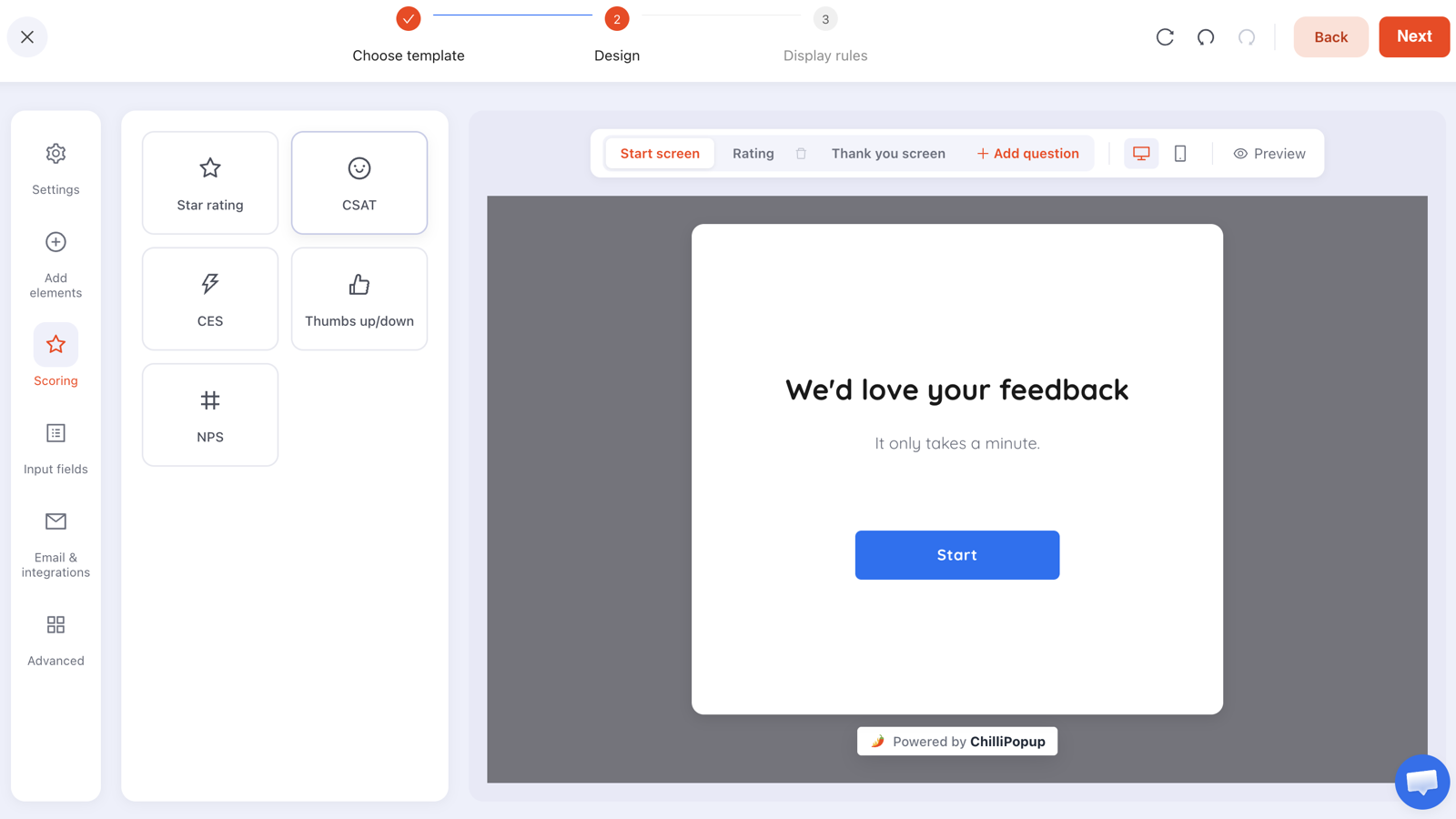
One question per screen means somebody can answer the first and stop — and you still keep what they entered.
Splitting the questions across steps matters more than it looks: stepped content records what people entered before abandoning, so a respondent who answers the disappointment question and then closes the tab still counts. On a single card, that person would leave you nothing at all.
Ask the question this week
Multi-step quizzes and surveys with per-question drop-off, partial answers and completion reporting. Free plan, no credit card required. Paid plans from $29/month.
Start free →Reading the result
The famous threshold is 40% of activated users answering "very disappointed". It is a widely used rule of thumb rather than a law of nature, and it is worth understanding what it is for: it distinguishes "people would be annoyed if this vanished" from "people would go looking for a replacement".
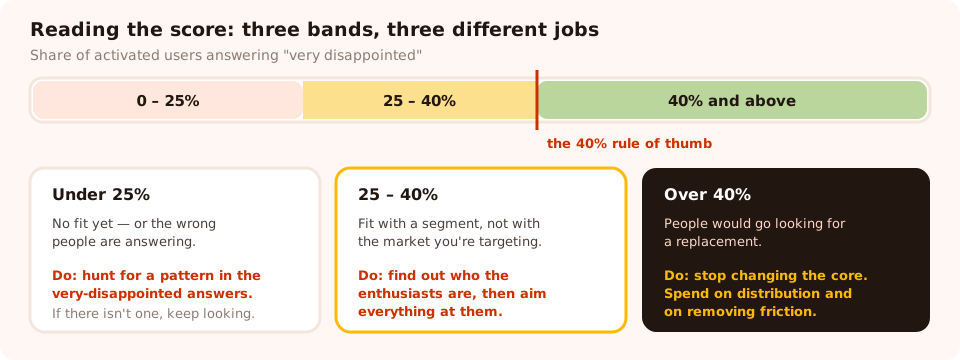
Three bands, three different jobs. Only one of them is "go faster".
| Result | What it usually means | What to do next |
|---|---|---|
| Under 25% | No fit yet, or the wrong audience is answering | Read the very-disappointed answers for a pattern. If one exists, narrow the product towards it. If not, keep looking |
| 25–40% | Fit with a segment, not with the market you are targeting | Find who the enthusiasts are, then aim positioning and acquisition at them specifically |
| Over 40% | Strong signal — people would go looking for a replacement | Stop changing the core. Spend on distribution and on removing friction for the people already arriving |
| High, tiny sample | Not a result yet | Keep collecting. Under about forty answers the number swings several points per response |
Two things the percentage cannot tell you, and both matter more than it does: who the enthusiasts are, and what words they use for the benefit. Those come from the follow-ups. A team that reads the number and skips the text has run an expensive vanity metric.
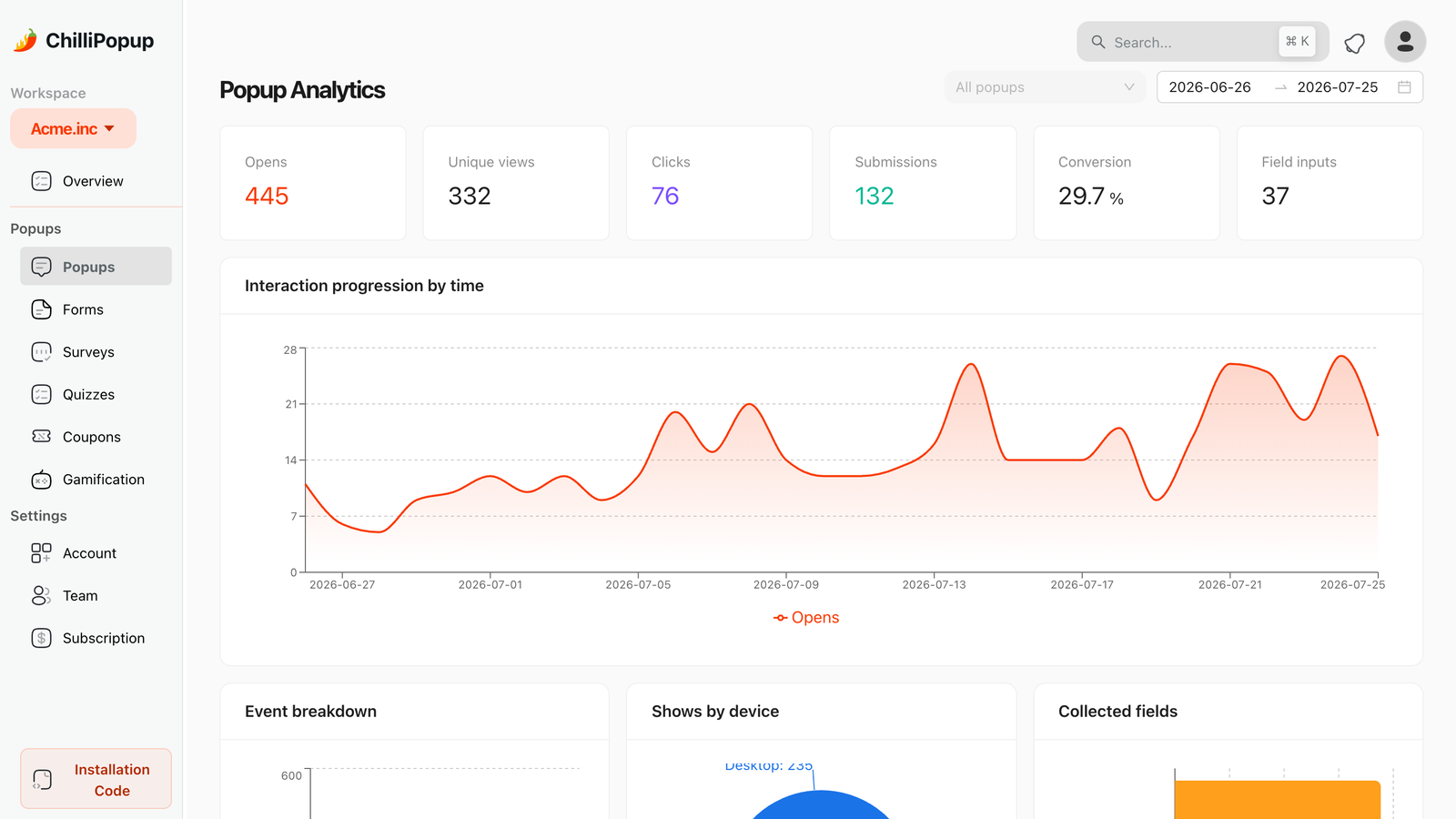
Completion, drop-off and the per-question breakdown — plus the partial answers from people who stopped after question one.
Six ways this survey gets wasted
- Surveying everyone. Non-users answering a question about loss produces a number that describes your onboarding.
- Changing the wording between runs. The trend is the whole point, and rewording destroys it.
- Reading feature requests unfiltered. The loudest requests often come from people who would not miss you, and building them takes you further from the people who would.
- Treating 40% as pass or fail. It is a compass. Direction and consistency of the free text matter more than the decimal place.
- Running it once. A single reading has no trend, and the trend is the signal.
- Never closing the loop. If nobody hears what changed, the second round gets a worse response rate than the first.
Related reading
Frequently asked questions
What is a product-market-fit survey?
It is a short survey built around one question: how would you feel if you could no longer use this product? Respondents pick very disappointed, somewhat disappointed or not disappointed, and the share choosing 'very disappointed' is used as a proxy for product-market fit. Three open follow-ups explain the result, and those answers are usually more useful than the number.
What is a good product-market-fit score?
Around 40% of activated users answering 'very disappointed' is the rule of thumb the industry has settled on as a sign of fit. Treat it as a compass rather than a target: a 30% score with a clear, consistent description of who loves the product is far more useful than a 45% score from a sample you cannot describe.
Who should I send a product-market-fit survey to?
Only people who have genuinely used the product — however you define activation. Asking signups who never got started measures your onboarding, not your fit, and it drags the score down in a way that hides the signal. Exclude anyone who has not completed the core action at least once.
What are the three follow-up questions?
What type of person do you think would benefit most from this? What is the main benefit you get from it? And how could we improve it for you? The first gives you positioning language, the second gives you the value proposition in customers' own words, and the third gives you the roadmap — read against the very-disappointed segment only.
Should the product-market-fit question use a rating scale?
No. Three named options work better than a 1-to-10 scale because each option means something concrete, and there is no neutral middle to hide in. In ChilliPopup, tappable options are the question type used by quizzes while rating scales belong to surveys — so build this one as a quiz, whatever you call it internally.
How often should I re-run it?
Every quarter at most, and always with the same wording and the same definition of an activated user. The number is only useful as a trend; changing the question or the audience between runs makes the comparison meaningless, which is the most common way this survey gets wasted.