Most seasonal popups are judged on conversion rate. This one is judged on tone first, and by an audience that has seen a decade of identical campaigns. A percentage off, a pink background and the word empowerment is now a recognised genre — and recognising it is not the same as liking it.
The good news is that the campaigns which land are also the cheap ones. Nothing below requires a big budget. What they require is something specific and true to say, and the discipline to say it in one line.
Key Takeaways
- A discount alone is the weakest option — and the one most likely to read as opportunism.
- Credibility comes from specificity: name the makers, the organisation, the amount, the period.
- Asking beats announcing. A two-question survey is the strongest campaign on this list for most stores.
- The window is narrow — three to five days around 8 March, with a scheduled end date.
- Never gate the page. A values message that blocks the content contradicts itself.
The credibility ladder
Order your options by what they cost you in effort versus what they earn in trust. The pattern is consistent: the campaigns that require you to have done something real are the ones that land.
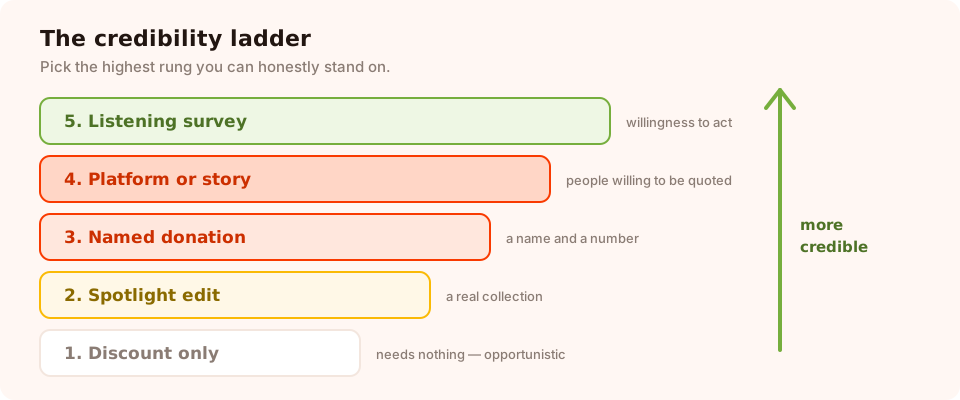
Same date, five levels of credibility. Pick the highest rung you can honestly stand on.
| Rung | Campaign | What it needs from you | How it reads |
|---|---|---|---|
| 1 | Discount only | Nothing | Opportunistic unless attached to something real |
| 2 | Spotlight edit | A collection you can genuinely curate | Useful — it points shoppers at products |
| 3 | Donation | A named organisation and a real number | Strong when specific, hollow when vague |
| 4 | Platform or story | People willing to be named and quoted | Memorable, and reusable all year |
| 5 | Listening survey | Willingness to act on the answers | The most credible thing a brand can do: ask |
Eight Women's Day popup campaigns
1. The listening survey
Two questions, no offer. "One question we should have asked sooner: what does our range get wrong for you?" A short survey on the day itself, triggered on scroll rather than arrival, with the answers reported per question so you can see where people quit and what they actually wrote.
This is the highest-credibility campaign available to almost every store, and the only one whose value keeps compounding: the answers are product research you will still be using in six months. The one condition is that you intend to read them.
2. The spotlight edit
"Today's edit: 14 products from women-led makers we work with." A popup on collection pages linking to the filtered view. It is useful, it is checkable, and it sends traffic somewhere concrete instead of gesturing at a sentiment.
3. The named donation
"This week, £2 from every order goes to [named organisation]." Specific amount, specific recipient, specific window. Vague versions of this line — "a portion of proceeds", "we're supporting women" — are worse than not running the campaign, because the vagueness is what people notice.
Only claim what you can show. Whatever the popup promises, someone will check. Link to a page with the organisation's name, the mechanism and, afterwards, the total. If you cannot publish the total, reconsider the claim.
4. The customer story campaign
Real quotes from real customers, with their permission and their first name. A popup carrying one short quote and a link to the full set does more for trust than any adjective you could write about yourself. Collect them with a form the week before, and use only what you are given permission to use.
5. The team feature
Small brands underuse this. "Meet the four people who make everything you buy from us." One line, one photo, one link. It works because it is unfakeable — and it is content you can reuse in the about page, the welcome email and next year's campaign.
6. The knowledge share
If your product sits in a category with real information asymmetry — health, finance, sizing, safety — the most respectful campaign is a guide. "The straightforward guide we wish existed when we started." Email capture in exchange for something genuinely useful, which is the one trade that never reads as exploitative.
7. The community invitation
An event, a workshop, a discussion, a local meetup. "Thursday, 7pm: an open conversation with three of our makers. Twenty seats." Constraint makes it real; a link to a page with a date and a limit makes it checkable.
8. The offer, done properly
If a discount is what you have, attach it to something. "20% off our women-led collection this week — and £2 per order to [organisation]." The percentage is not the message; it is the mechanism. And make sure the collection exists before you promote it.
The one-sentence test. Read your popup out loud, then ask: could any competitor in my category run this exact campaign by changing the logo? If yes, it is a template, not a campaign. Add the detail only you have.
The copy swaps that matter
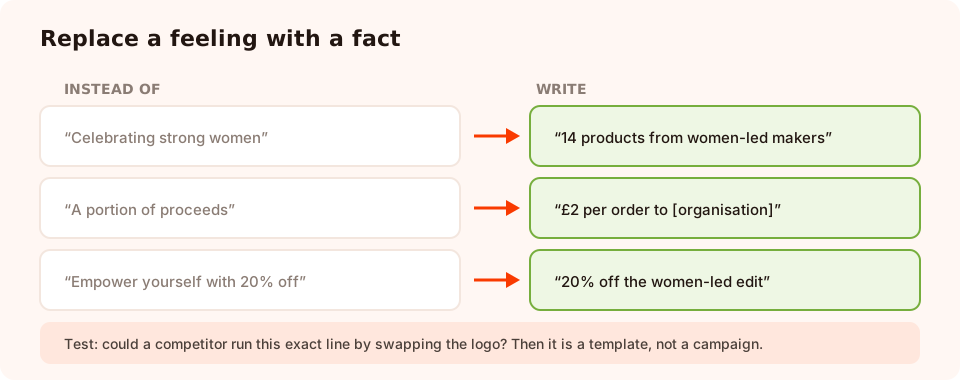
Every swap does the same thing: replaces a feeling with a fact.
| Instead of | Write | Why |
|---|---|---|
| "Celebrating strong women everywhere" | "14 products from women-led makers we work with" | Countable, and it links somewhere |
| "A portion of proceeds supports women" | "£2 from every order this week goes to [organisation]" | Verifiable, so it is believable |
| "Empower yourself with 20% off" | "20% off our women-led collection until Sunday" | The discount stops pretending to be a value |
| "Because you deserve it" | "Free next-day delivery on everything today" | A benefit instead of a compliment |
| "Happy Women's Day to all our amazing customers!" | "One question we should have asked sooner…" | Asks rather than announces |
Two more wording notes. Avoid assuming your visitor's gender — a popup that opens with "Happy Women's Day to you" is addressing a person you cannot see. And skip the exclamation mark; on this date it reads as a costume. The popup copywriting guide has the general rules these swaps come from.
Scheduling and display rules
The date is fixed — 8 March — which makes this a narrow, sharply-timed campaign rather than a season.
- Date window. Three to five days around the 8th, with a start and end date and hours in a chosen GMT offset. Set it while you build; a values campaign still running two weeks later undermines itself.
- Trigger. Scroll depth or a delay of 10–20 seconds. Not on arrival: a message about respect should not be the first thing that interrupts someone.
- Close control. Visible X, no reveal delay, no content gate. On this campaign in particular, an easy exit is part of the message.
- Frequency. Once a day. Nobody needs to be told twice in a session.
- Page targeting. Put the spotlight edit on collection pages, the survey where people are already engaged — articles, account pages, post-purchase — and keep both off the checkout.
- Pause the standing offer. Running a welcome discount alongside this makes both look like sales tactics.
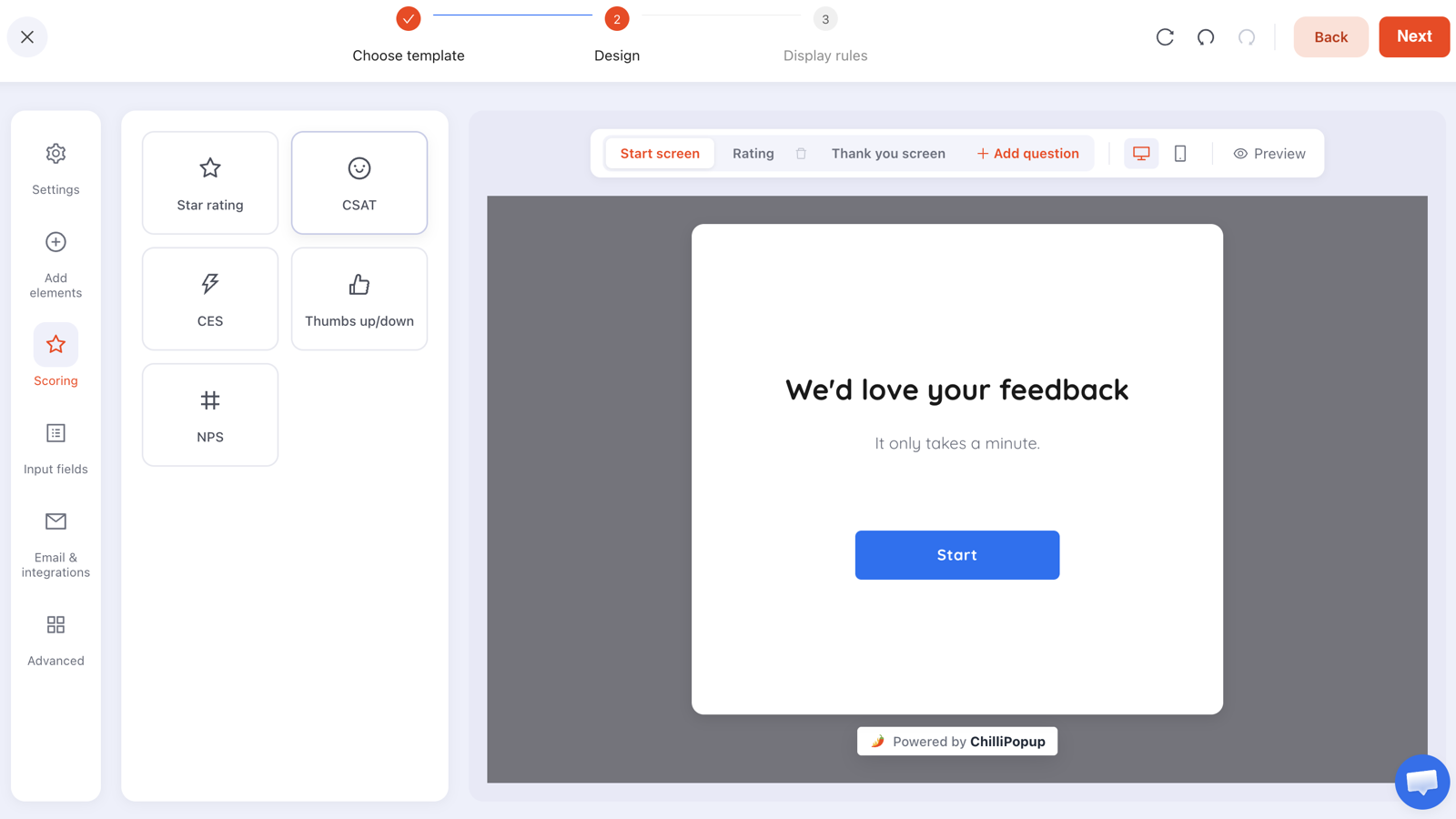
A two-question survey, built as steps: one question per screen, and the answers reported per question.
How to run the listening campaign well
- Two questions, maximum. One open, one scaled. "What does our range get wrong for you?" plus a rating on how easy the site is to use.
- No email required. Make it optional. Requiring it converts the answer into a lead-gen form and people can feel the difference.
- Say what happens next. "We read every answer and we'll publish what we change." Then do it, in a month, in a short post or email.
- Read the drop-off. Stepped content reports which question people quit on, and partial answers are recorded even when someone leaves without submitting — so a question that loses people is visible, not guesswork.
- Close the loop publicly. The follow-up is the part almost nobody does, and it is the part that turns a one-day campaign into a reason to trust you.
Six mistakes to avoid
- Pink as the whole idea. A colour is not a position.
- Unverifiable claims. "Supporting women everywhere" invites the question you cannot answer.
- Gating the page. A content gate on this campaign is a contradiction people will screenshot.
- Assuming who is reading. Address the offer, not the person's identity.
- No end date. The fastest way to turn a marked occasion into a themed sale.
- Asking and then ignoring. A survey you never read is worse than no survey, because you asked in public.
What to measure
Conversion rate is the wrong headline here. Read the campaign on three numbers instead: how many people saw it, how many answered or clicked rather than dismissing, and — for the survey — what the answers actually said. Each campaign reports its own views, clicks, submissions and conversion rate, plus the values collected per field, and stepped content adds completion rate, average time and a per-question drop-off view.
The asset you keep from this date is not revenue. It is a set of answers in your own customers' words, and a collection page that still works in April.
Build the campaign that asks, not just the one that sells
Popups, surveys, quizzes and forms from one editor, each with its own schedule. Free plan, no credit card required. Paid plans from $29/month.
Start free →Related reading
Frequently asked questions
When is International Women's Day?
8 March, every year. Because the date is fixed rather than tied to a weekend, the campaign window is narrow: most of the attention lands on the day itself and the two or three days either side, which is why a scheduled date window matters more here than in a gifting season.
Should an online store run a discount for Women's Day?
A discount on its own is the weakest option available and the one most likely to read as opportunism. It works when it is attached to something real — a collection by women-led makers, a donation, a community initiative you can point to — and it reads badly when the only connection between the date and the offer is the marketing calendar.
What makes a Women's Day campaign credible?
Specificity and verifiability. Name the makers, name the organisation, state the amount or the percentage and the period it applies to, and link to something a sceptical visitor can check. Campaigns fail on vagueness far more often than on ambition.
What should a Women's Day popup avoid?
Assumptions about who your visitor is, stock phrases about strength and empowerment with nothing behind them, claims you cannot substantiate, and pink as the entire creative idea. Also avoid gating content behind the campaign — a values message that blocks the page contradicts itself.
Can I use a survey instead of an offer?
Yes, and it is often the strongest option. A two-question survey asking customers what they want more of — or what your product gets wrong for them — turns the date into research you will still be using in six months, and it asks nothing except an opinion.
How long should the campaign run?
Three to five days around 8 March, with a date window set when you build it so the campaign retires itself. Anything longer starts to look like a themed sale rather than a marked occasion.