Customer effort score measures one thing: how much work a customer had to do to get something done. It is collected right after a task — a checkout, a support conversation, a return — on a seven-point scale, and it answers a question satisfaction surveys cannot: will this person be willing to do that again?
That is the whole appeal. People forgive a mediocre experience. They quietly avoid a laborious one, and they rarely tell you why.
Key Takeaways
- CES measures a task, not a brand. Name the interaction before you write the question.
- Seven points, agreement wording — "the company made it easy for me…", from strongly disagree to strongly agree.
- Ask within minutes. Effort is remembered precisely for minutes and vaguely for days.
- The open follow-up is the useful half. The number says there is friction; the comment says where.
- Report the low-effort share, not just the average — an average hides a split between people who sailed through and people who struggled.
What CES measures — and what it doesn't
Effort is a property of an interaction, not of a company. "How easy was checkout?" is a CES question. "How easy is our company to work with?" is a mood survey wearing a CES costume, and the answers will be useless because nobody can average a year of experiences into one number honestly.
So the first decision is which single task you are measuring. Four candidates are worth it:
- Checkout. The task with the most direct revenue consequence, and the one most often measured by proxy (abandonment) rather than by asking.
- A support conversation. The original home of the metric, and still where it produces the sharpest comments.
- Onboarding or setup. Where effort predicts whether somebody ever becomes a real customer.
- A return or exchange. The moment a customer is most likely to decide whether they will order again.
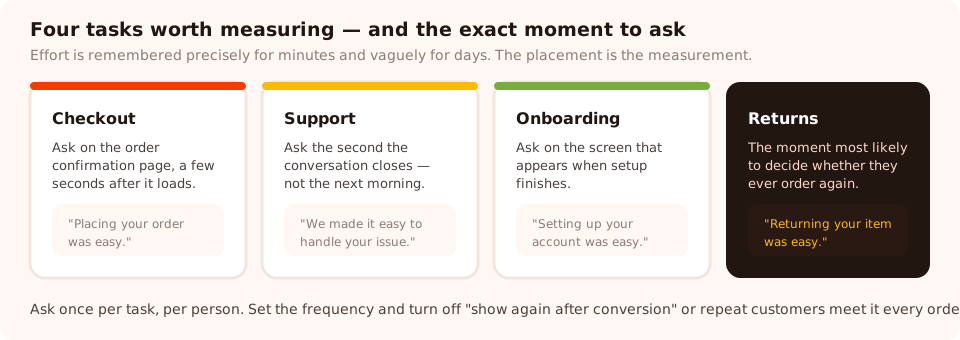
One task, one question, asked at the moment the task finishes. Anywhere else and you are measuring memory.
CES, satisfaction and recommendation
Three metrics that get used interchangeably and measure completely different horizons. Running all three at once is a common and expensive mistake — each one has a moment where it is the right instrument.
| Effort (CES) | Satisfaction (CSAT) | Recommendation | |
|---|---|---|---|
| Asks about | How hard a task was | How happy an interaction made them | The whole relationship |
| Scale | 1–7 agreement | 1–5 satisfaction | 0–10 likelihood |
| Ask it | The second a task ends | Just after a service moment | Quarterly, at most |
| Predicts | Whether they will do it again | How they felt about it | Long-run loyalty and advocacy |
| Best used for | Finding friction to remove | Watching service quality | A board-level trend line |
There are dedicated walk-throughs for the other two — the satisfaction survey guide and the recommendation score guide — and a broader comparison in the customer feedback survey guide.
The wording, and the scale
CES is unusual among survey metrics in that the standard version is a statement you agree or disagree with, not a question:
"[Company] made it easy for me to handle my issue."
Strongly disagree · Disagree · Somewhat disagree · Neutral · Somewhat agree · Agree · Strongly agree — scored 1 to 7, where 7 is the least effort.
Adapt "handle my issue" to the task — "place my order", "set up my account", "return my item" — and leave everything else alone. Two details are worth respecting:
- Seven points, not five. The extra granularity gives people room to register mild friction, and mild friction is where most of the fixable problems live. A five-point scale pushes those people into "neutral", where they disappear.
- High means easy. Getting the direction backwards is the single most common CES implementation bug, and it produces a chart that looks like an improving experience while the opposite is happening. Label both ends explicitly.
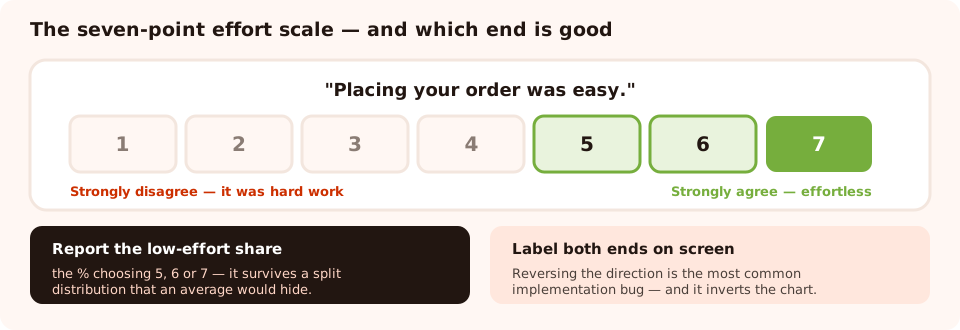
Label both endpoints on screen. A bare 1-to-7 row makes half your respondents guess which end is good.
The wording is the instrument. Once you have run it, do not tune the sentence. A rewritten question resets your trend line, and every comparison after it is with a different measurement.
Timing beats everything
Effort is a physical memory. Ask someone the moment they finish and they will tell you precisely which step was annoying. Ask them the next morning and they will tell you how they feel about your brand.
Which means:
- The confirmation page, a few seconds after it loads — the best placement there is for checkout effort. Target it by URL so it appears nowhere else.
- The end of a support conversation, as soon as it closes.
- The screen after setup completes, for onboarding effort.
- Not in a weekly email digest. By then the specific friction is gone and only the sentiment remains.
One rule for every placement: ask once. Set an explicit display frequency and turn off "show again after conversion", so a repeat customer who has already told you how easy checkout was is not asked again on every order.
The follow-up question that does the work
A score on its own tells you that something is wrong and nothing about what. One optional open question on the next step fixes that:
Step 1: "Placing your order was easy." — seven-point scale.
Step 2: "What made it feel that way?" — one short text field, optional, with a placeholder like "Anything at all — we read these."
Step 3: "Thanks. We read every one of these, and the most common answer decides what we fix next."
Because the questions sit on separate steps, somebody who answers the scale and then closes the tab still counts — stepped content records what was entered before an abandon. Put both on one card and that person gives you nothing.
Resist the urge to add a third question. CES earns its response rate by being visibly one tap, and every extra field trades a percentage point of response for information you could have got from the comments.
Ask how hard it was — at the moment it happened
Effort, satisfaction, recommendation, star and thumbs scales on stepped surveys, with per-question drop-off and partial answers. Free plan, no credit card required. Paid plans from $29/month.
Start free →Calculating and reading the score
Two accepted ways to turn the answers into a number. Pick one and never switch.
- The average. The mean of all responses, reported to one decimal place. Simple, and the version most teams start with.
- The low-effort share. The percentage choosing 5, 6 or 7. Harder to game, and much better at surviving a bimodal distribution — which effort data very often has.
Report both if you can, but let the share drive decisions. An average of 5.2 can mean "almost everyone found it slightly easy" or "two-thirds found it trivial and a third found it miserable", and those two situations call for completely different work.
| Reading | What it suggests | What to do |
|---|---|---|
| Average above 5.5 | The task is genuinely low-effort for most people | Move the survey to a different task — this one is not your problem |
| Average 4.5–5.5 | Workable, with a group who struggle | Read the comments attached to scores of 1–3; they usually name one step |
| Average under 4.5 | Real friction, and it is costing you repeat business | Treat the comments as a bug list and fix the most common cause first |
| Split distribution | One segment sails through, another does not | Find what separates them — device, plan, first-time versus repeat |
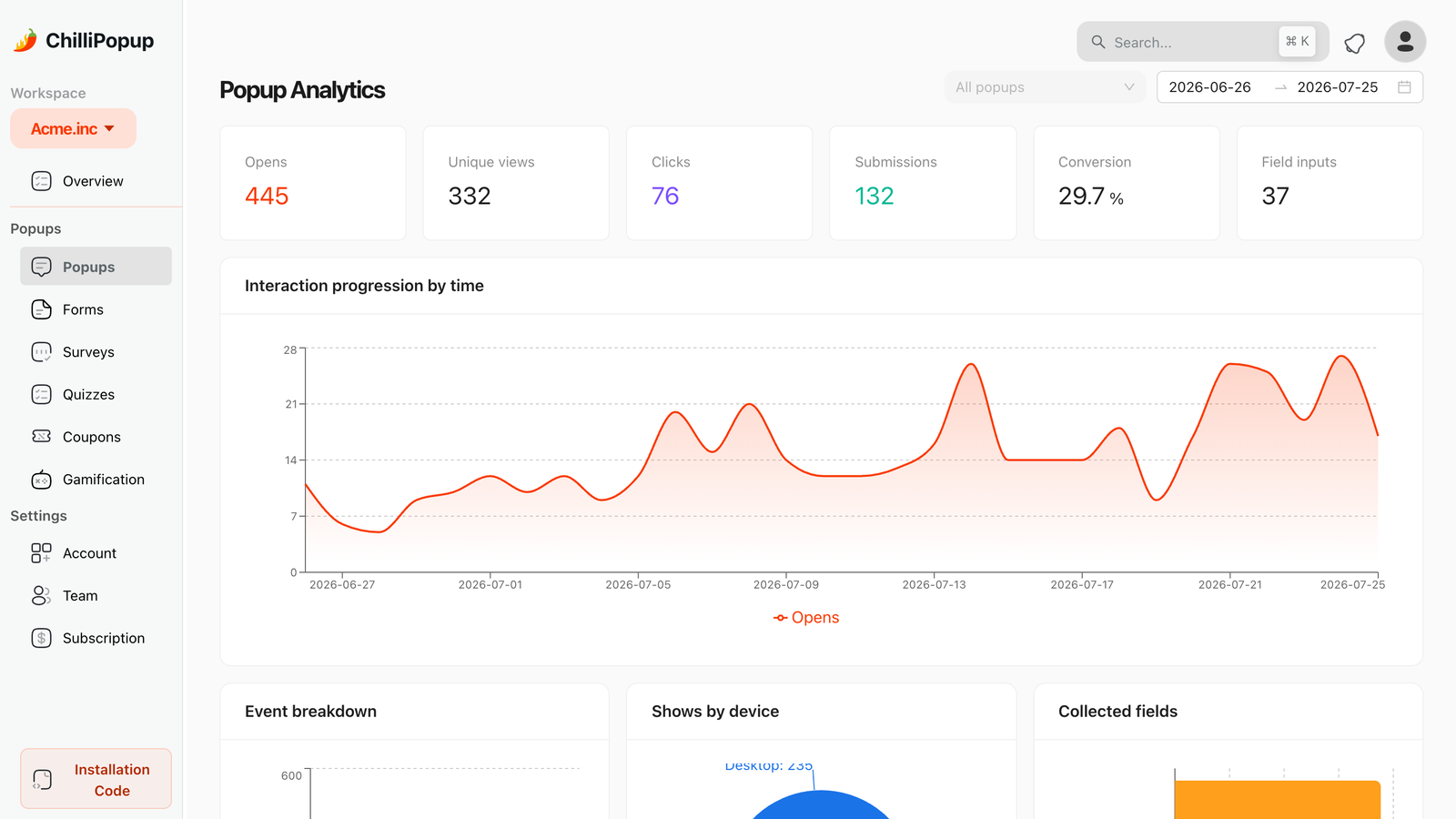
The distribution matters more than the mean. Watch the shape, not just the number.
Turning the score into fixes
CES is only worth collecting if it produces a list. The routine that works is unglamorous and takes about an hour a month:
- Pull every response scoring 1 to 4 and read the comments attached to them.
- Group them by cause, not by wording. "Couldn't find the discount box", "code didn't work" and "had to re-enter my card" are three symptoms of one checkout page.
- Fix the biggest group. One fix, shipped, beats five noted.
- Watch the same question on the same page four weeks later. Same wording, same placement, same calculation — otherwise you cannot claim the change did anything.
- Tell people. "You said the discount box was hard to find. We moved it." That single sentence in a newsletter earns you the next round of responses.
Six mistakes
- Asking about the company instead of the task. You get a mood, not a signal.
- Reversing the scale. High must mean easy. Label both ends so nobody has to guess.
- Asking days later. The specific friction has already evaporated.
- Reporting only the average. It hides exactly the split you most need to see.
- Skipping the open follow-up. A number with no explanation generates meetings, not fixes.
- Running effort, satisfaction and recommendation on the same page. Three questions about one moment is a survey, and it will be treated like one.
Related reading
Frequently asked questions
What is customer effort score?
Customer effort score, or CES, measures how much work a customer had to do to get something done — completing a purchase, resolving an issue, setting up an account. It is usually collected as agreement with the statement 'the company made it easy for me to handle my issue', on a seven-point scale, immediately after the task.
What is a good CES score?
On a seven-point scale, an average above 5 is generally healthy and anything at or below 4 points at real friction. The more useful reading is the share of people choosing 5, 6 or 7 — the low-effort share — because an average hides a bimodal split where half your customers sail through and half struggle.
What is the difference between CES, CSAT and NPS?
They measure different horizons. CES measures one interaction that just happened and predicts whether someone will come back. CSAT measures how satisfied they felt about that interaction. Recommendation score measures how they feel about the whole relationship. Use effort after a task, satisfaction after a service moment, and recommendation quarterly at most.
When should I send a CES survey?
Immediately after the task ends, and no later. Effort is remembered precisely for minutes and vaguely for days, so an email sent the next morning measures mood rather than effort. On a website that means the confirmation page, the moment a chat closes, or the screen that appears when setup finishes.
Should the effort scale be 1-to-5 or 1-to-7?
Seven is the convention for effort, and it is worth keeping. The extra points give people room to express mild friction, which is exactly the signal you want — the difference between 'fine' and 'slightly annoying' is where most fixable problems live.
Does a low effort score actually predict loyalty?
The evidence behind CES is that reducing effort is a stronger predictor of repeat business than delighting people is. In practice the useful version of that claim is narrower: a task that felt like work is a task customers avoid repeating, and the open comments attached to low scores are usually a list of specific things you can fix this quarter.